The skin around your eyes behaves nothing like the skin on your cheeks or forehead, and that’s the main reason dark circles and crow’s feet are so stubborn. If you’ve been applying your regular moisturizer to that area and wondering why nothing changes, this is why. The eye area needs its own approach, and the good news is that approach doesn’t have to be complicated or expensive.
This guide walks through what’s actually happening in the skin around your eyes, what natural ingredients and habits genuinely help, and how to fold a few extra minutes into the routine you already have, without adding a dozen new products to your counter.
Why the eye area ages differently than the rest of your face
The skin under and around your eyes is roughly a third as thick as the skin elsewhere on your face. It has far fewer oil glands, which means it holds onto moisture poorly and shows dryness fast. It also sits directly over a thin layer of fat and muscle that moves constantly, every blink, squint and smile.
That combination, thin skin, little oil, constant motion, makes this area the first to show fine lines, the first to look hollow or shadowed, and the slowest to bounce back from a poor night’s sleep or a salty dinner. Blood vessels underneath also sit closer to the surface here, which is a big part of why dark circles happen at all.
Because the skin is thinner and more fragile, it’s also more reactive to pulling, rubbing and harsh ingredients. Anything you do in this area needs a lighter touch than the rest of your skincare routine.
What’s actually causing your dark circles (and why it matters for treatment)
Not all dark circles come from the same source, and the cause matters because it points you toward what will actually help.
- Visible blood vessels. Thin skin lets the bluish or purple tint of blood vessels show through, especially when you’re tired or dehydrated and the skin gets even thinner-looking.
- Pigmentation. Some dark circles are genuinely a buildup of melanin, often genetic, and tend to look brown rather than blue or purple.
- Hollowing. As we age, the fat pad under the eye can thin or shift downward, creating a shadow that looks like a dark circle even when the skin tone hasn’t changed.
- Fluid retention and puffiness. Swelling under the eyes can cast its own shadow, making circles look darker than they are.
Most people are dealing with some mix of these, which is why a single product rarely solves it on its own. Circulation-boosting habits help with the vascular type, brightening ingredients help with pigmentation, and hydration and volume-supporting care help with hollowing.
Cooling and circulation tricks you can do tonight
Cold temperature constricts blood vessels, which is why cooling the eye area can visibly reduce both puffiness and that bluish tint almost immediately.
A few simple options:
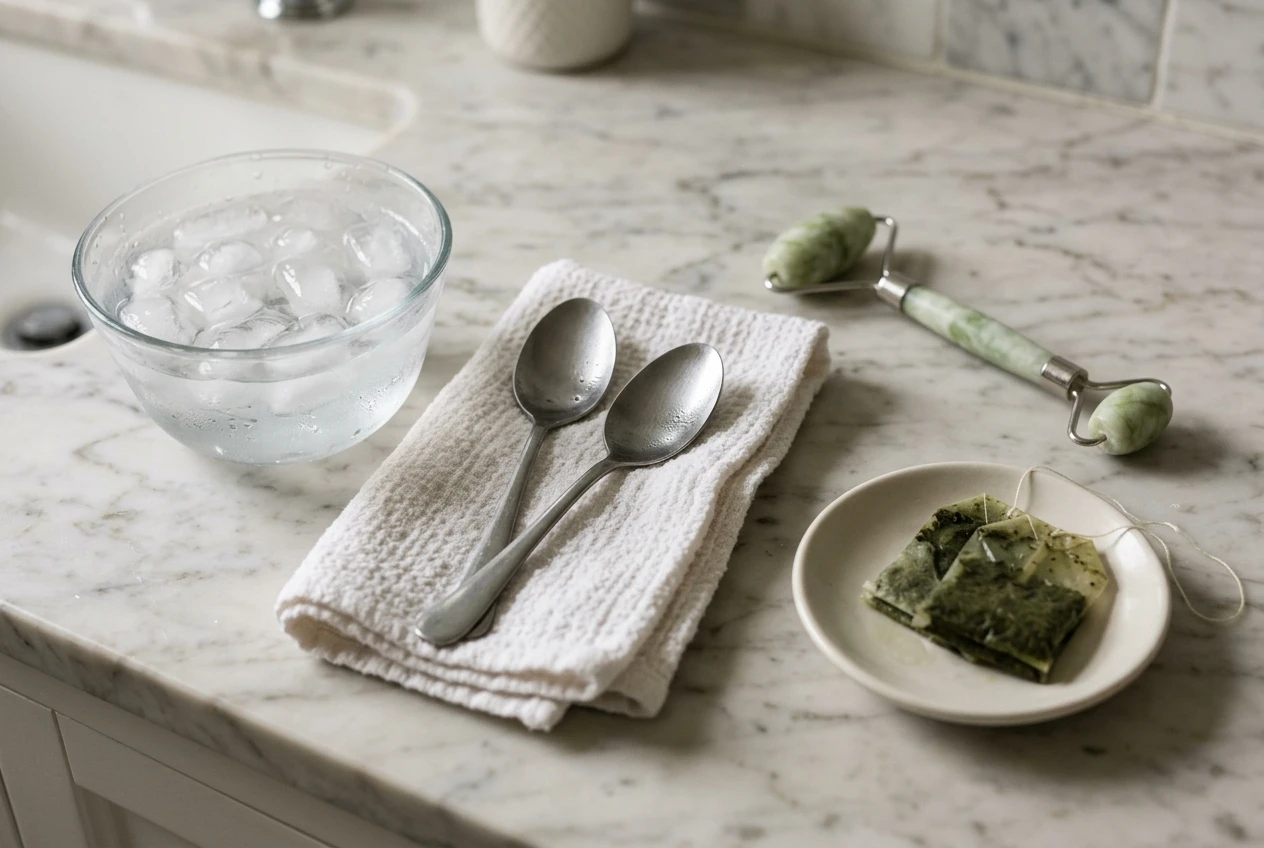
- Chilled spoons. Keep two metal spoons in the fridge or freezer and press the rounded back gently against closed eyes for a minute or two.
- Cold compress. Wrap a few ice cubes in a soft cloth, or use a clean washcloth soaked in cold water and wrung out, and hold it over closed eyes for five minutes.
- Jade or quartz rollers, chilled. Store a facial roller in the fridge so it’s already cool when you use it, which combines the cooling effect with gentle massage.
- Used, cooled tea bags. Chamomile and green tea bags contain tannins and antioxidants that can help with puffiness; cool them in the fridge after brewing, then press against closed eyes for ten minutes.
Elevating your head slightly while you sleep, with an extra pillow, also helps fluid drain away from the face overnight rather than pooling under the eyes by morning.
Natural ingredients that genuinely help brighten and firm
A few ingredients have real evidence behind them for the eye area specifically, and they’re worth looking for whether in a dedicated eye cream or a gentle serum.
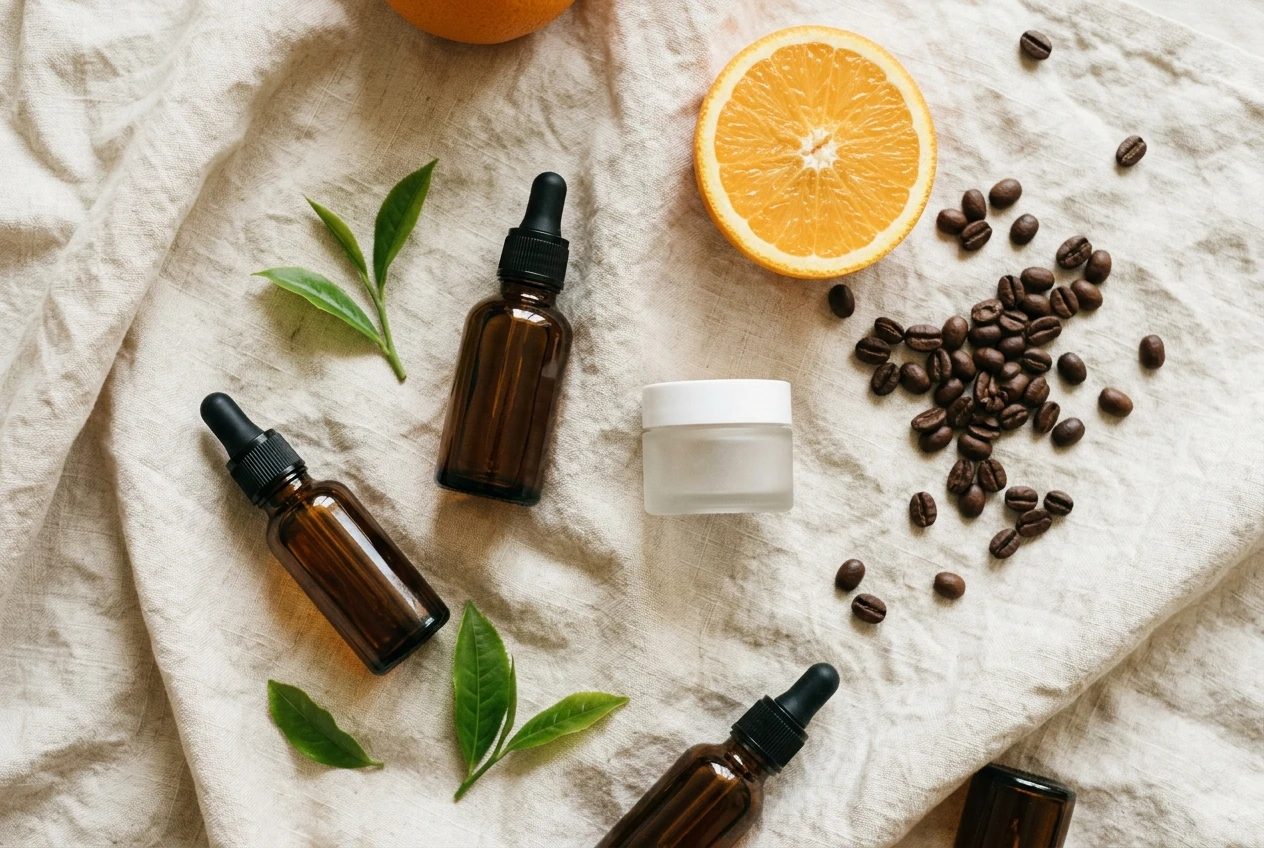
- Vitamin C. Helps fade pigmentation over time and supports collagen production, which firms the skin and softens the look of fine lines. Look for a stable, lower-strength formula made for the eye area rather than a potent face serum.
- Caffeine. Constricts blood vessels and reduces fluid buildup, which is why so many eye creams include it. It’s one of the few ingredients that addresses puffiness and dark circles from visible blood vessels at the same time.
- Vitamin K. Often paired with vitamin C or retinol in eye products, and some evidence suggests it helps with the vascular type of dark circles by supporting blood clotting and vessel strength.
- Hyaluronic acid. Draws moisture into the skin, plumping fine lines temporarily and helping the thin skin here hold onto hydration it would otherwise lose quickly.
- Peptides. Support the skin’s own collagen and elastin production, which over time can soften crow’s feet and improve firmness.
- Niacinamide. Gentle enough for daily use around the eyes, and helps even out pigmentation while strengthening the skin barrier.
If you’re building out a broader anti-aging routine alongside your eye care, it’s worth seeing how these ingredients fit into the rest of your skin, which is something covered in more depth in the anti aging skincare routine that actually works in your 40s.
Whatever you choose, patch test anything new before applying it close to your eyes, and apply with your ring finger, which naturally uses the lightest pressure.
Simple facial massage moves for puffiness and tired eyes
A short massage, done with clean hands and a light touch, can move along the lymphatic pathways under the eyes and encourage fluid to drain rather than sit and swell.
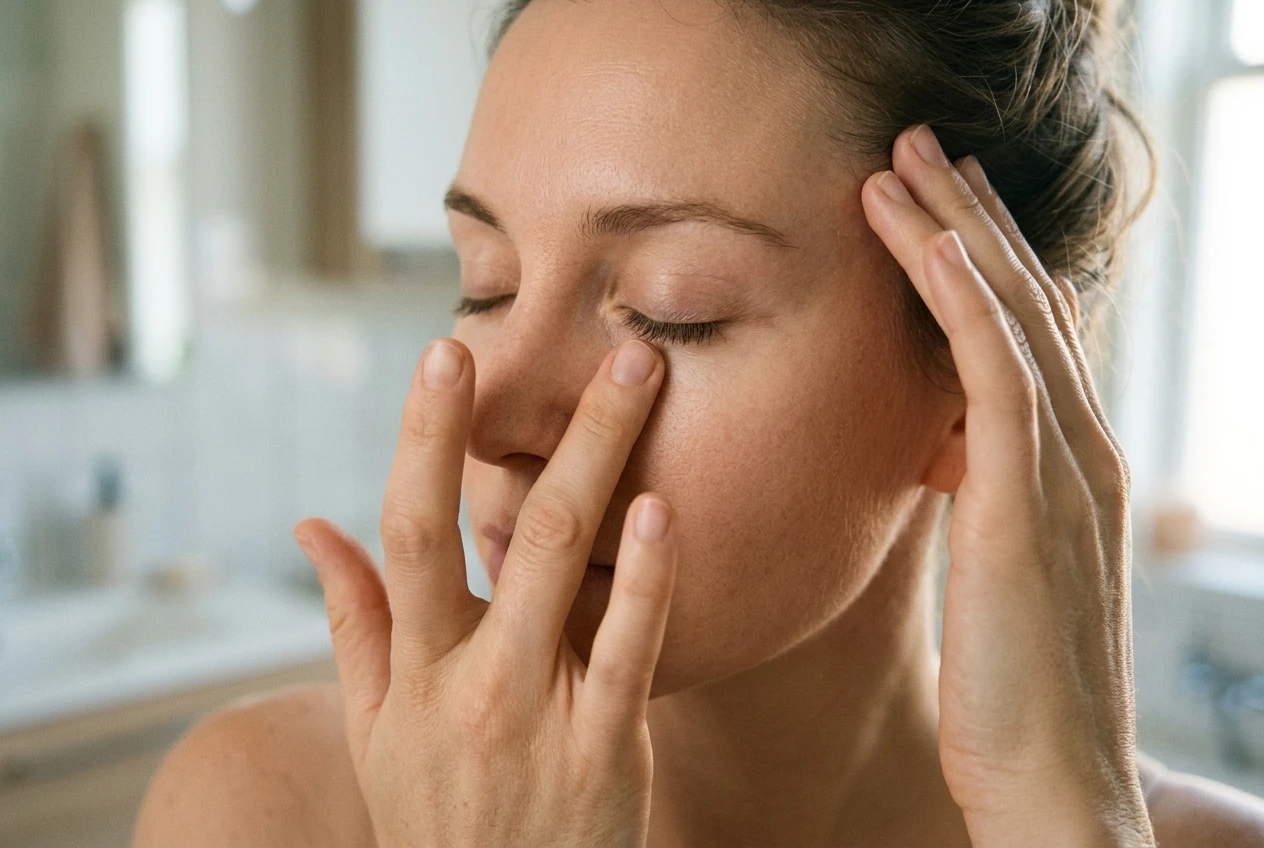
A simple routine:
- Starting at the inner corner of the eye, under the brow bone, use your ring finger to gently tap or press along the bone toward the outer corner.
- Continue the same light pressing motion along the under-eye area, moving from the outer corner back toward the inner corner, following the orbital bone rather than the soft tissue directly under the eye.
- Finish by gently pressing at the temple for a few seconds, which is a natural drainage point.
Repeat this two or three times. The whole thing takes under a minute and can be done with a facial oil, eye cream, or chilled roller for extra effect. The key is pressure: this should feel like a light press, never a pull or drag, since tugging at this thin skin over time can contribute to the very fine lines you’re trying to soften.
Sleep, hydration and habits that show up first around your eyes
Before any product or treatment, the basics show up here faster than anywhere else on your face. A single poor night’s sleep, a dehydrated day, or an evening of too much salt can all be visible under your eyes the next morning in a way they simply aren’t on your cheeks.

A few habits worth protecting:
- Water intake throughout the day, rather than one large glass before bed, which just leaves you puffy in the morning.
- Consistent sleep timing, since both too little sleep and disrupted sleep patterns affect circulation and fluid balance under the eyes.
- Reducing sodium in the evening, which can reduce overnight fluid retention around the eyes specifically.
- Sun protection, since UV exposure breaks down collagen fastest in thin skin and worsens pigmentation; a mineral sunscreen applied carefully around the eye area makes a real difference over time.
- Not rubbing your eyes, which sounds small but repeated rubbing stretches this fragile skin and can worsen both fine lines and puffiness.
None of these require a new purchase. They’re the kind of daily choices that matter more here than in almost any other part of a skincare routine.
Building this into your existing routine without adding extra steps
The easiest way to make this stick is to attach it to something you already do rather than adding a brand new routine. If you already cleanse and moisturize morning and night, your eye cream or serum simply goes on after cleansing and before your regular moisturizer, patted on with your ring finger. The massage moves fit naturally into that same moment, since your hands are already at your face.
Cooling tools can live in the fridge next to your usual skincare, ready for the mornings you need them most. And habits like hydration and sleep timing aren’t separate from your skincare routine at all, they’re the foundation it sits on.
If you’re looking for more guidance on where eye care fits alongside everything else for your skin type and age, skincare advice for women over 30 is a good place to start.
Small, consistent steps around the eyes tend to add up faster than people expect, precisely because this skin responds quickly to both neglect and care. Grab the free printable eye-area routine checklist and get weekly gentle skincare tips sent straight to your inbox.