If you have ever stood in front of a shelf of eye products, you know how many promise to “brighten” the area under your eyes. The label rarely says which kind of dark circle the product is meant for, and that matters, because the best ingredients for dark circles under eyes depend on what is causing the color. An ingredient that fades brown pigment will do very little for a bluish tint, and neither will fill a hollow.
This guide sorts the common causes first, then matches ingredients to each one. After that, it covers how the choice shifts from your 30s to your 70s, how to introduce something new if your eyes are sensitive, and what to check on a label before you buy.
First, Figure Out Which Kind of Dark Circle You Have
Most dark circles come from one of three causes, and many people have a mix. A quick check in the mirror will usually show you which one leads.
Do this in good daylight, with a clean face and no makeup:

- The stretch test. Gently pull the skin at the outer corner of your eye sideways with one finger. If the color stays the same, it is likely pigment in the skin (brown-toned). If the color fades or shifts, it is more likely thin skin showing the vessels beneath (blue, purple or pinkish).
- The light test. Hold a mirror at chest height and tilt your face up toward a window or lamp, then lower your chin. If the dark area changes a lot with the angle of the light, you are probably seeing a shadow from a hollow or a puffy lower lid, not a color.
- The color check. Brown or tan tones suggest pigment. Blue, purple or reddish tones suggest vessels showing through. A gray or dim look that deepens at the inner corner suggests a shadow.
Use a light touch for all of this. Pulling hard on delicate eye skin is not worth the information. If the darkness appears suddenly, affects only one eye, or comes with swelling or pain, mention it to your doctor before buying anything.
Brown-Toned Circles: Ingredients That Help With Pigment
Brown-toned circles are caused by extra melanin in the skin. They tend to run in families, they often look darker after sun exposure, and they can deepen with age as sun damage builds up. Ingredients that work on pigment aim to slow its production or help the surface skin renew itself more evenly.
Look for these on the label:
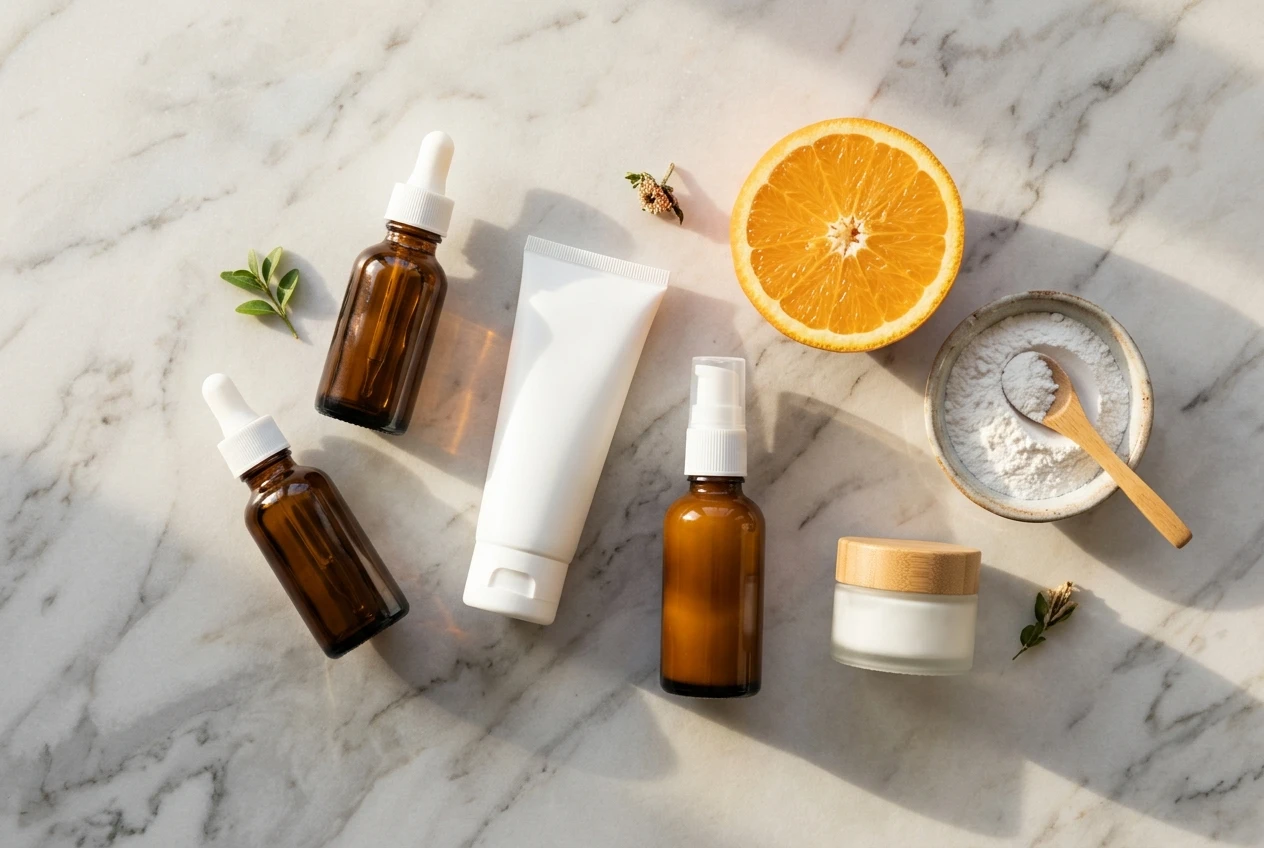
- Vitamin C (ascorbic acid and its gentler derivatives). An antioxidant that supports a brighter, more even tone and helps protect skin from sun-related stress. Pure ascorbic acid can sting. Derivatives such as magnesium ascorbyl phosphate are usually easier on sensitive eyes.
- Niacinamide (vitamin B3). Helps with uneven tone and supports the skin barrier. Many sensitive-skinned people tolerate it well, which makes it a sensible first pick.
- Arbutin and kojic acid. Both are used to reduce pigment. Choose products made specifically for the eye area, since stronger facial versions can irritate the thin skin around the eye.
- Tranexamic acid. A newer pigment-focused ingredient that appears in some eye and brightening products. Evidence is still developing, so treat it as worth trying, not a guaranteed fix.
- Retinoids. They speed up skin renewal and can fade pigment over time, but they are also the most likely to irritate. If that is you, the post on gentle retinol alternatives for sensitive skin covers options that ask less of your skin.
Pigment fades slowly. Expect to use a product for several weeks before judging it, and longer for deeper tones. Brown circles also darken again with sun exposure, so the daily habit near the end of this guide matters more here than for any other type.
Blue or Purple Circles: Ingredients That Support Thin, Tired-Looking Skin
The skin under the eye is among the thinnest on the body. When it gets thinner, or when blood vessels sit close to the surface, a blue, purple or pinkish tint shows through. Poor sleep, allergies and genetics can make it more noticeable, and so can paleness of skin, which shows vessels more easily.
No cosmetic ingredient can change where your vessels sit. What ingredients can do is make the skin look and feel a little thicker and plumper, and temporarily lessen the look of puffiness.
- Caffeine. Often included to reduce the look of puffiness and dull tone. The effect is temporary, so think of it as a good-morning product, not a lasting change.
- Peptides. Short chains of amino acids that are used in products aimed at making skin look firmer and smoother. Over time, firmer-looking skin can reduce how much shows through.
- Hyaluronic acid. Holds water at the surface, so the skin looks plumper and the fine lines that catch shadow look softer.
- Ceramides and glycerin. These support the skin barrier. Dry, rough skin reflects light unevenly and can make the whole eye area look more tired.
- Vitamin K. Shows up in many products aimed at bluish or purple circles. Research on it is limited, so I would not choose a product based on this ingredient alone.
- Vitamin C. Supports collagen production in the skin, which is part of what keeps skin looking thicker.
Because thin skin is also easily irritated skin, simple formulas usually serve this type best. If you are wondering whether a dedicated eye product is needed at all, the post on whether you need an eye cream or your face cream will do goes through that question in detail.
Hollows and Shadows: What Products Can and Can’t Do
Some dark circles are not a color at all. As we age, the fat pads and bone structure beneath the eye change, and a groove can form between the lower lid and the cheek. Light hits the hollow differently, and the area looks darker even though the skin itself is the same shade. Puffiness in the lower lid can cast its own small shadow too.
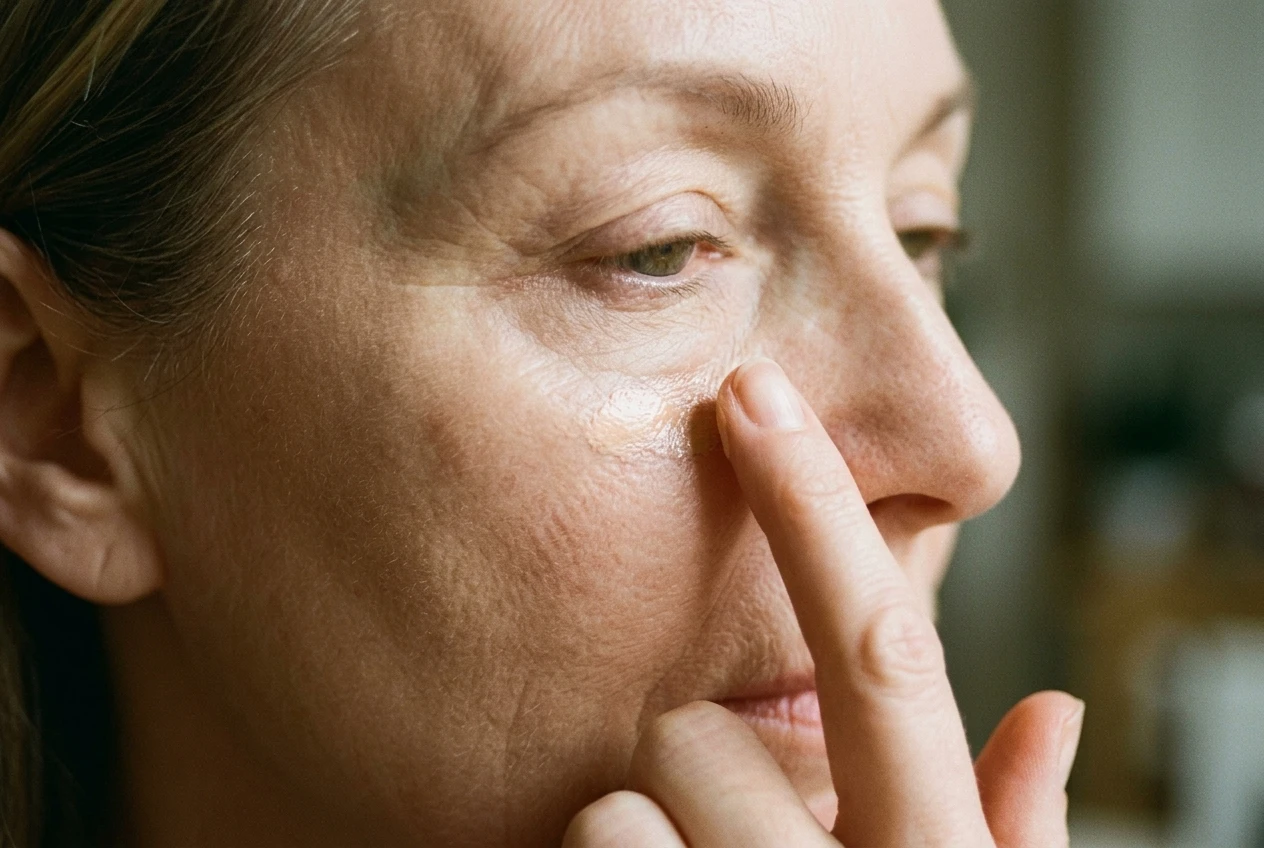
Here is what an ingredient can honestly offer in this case. Hydrating ingredients such as hyaluronic acid and glycerin can plump the surface and soften the look of the edge of the hollow. Peptides and vitamin C can support the skin’s look of firmness. Caffeine may lessen puffiness-related shadow for a few hours. A lightly tinted or light-reflecting concealer, applied in a thin layer, does more for a shadow than any serum, because it works on the light itself.
What a product cannot do is refill lost volume. If a hollow is your main concern, a dermatologist can explain in-office options and whether they suit you. That conversation is optional, and plenty of women are happy to work with skincare and makeup alone. It helps to know what each can realistically do, so you are not spending money on promises a cream cannot keep.
Picking the Right Ingredient in Your 30s, 40s, 50s and Beyond
The cause of your dark circles matters most, but age changes which ingredient is the better first choice. The skin makes less collagen and holds less moisture as the years pass, and it usually becomes more sensitive too.
In your 30s, circles are often pigment, tiredness or genetics. Vitamin C and niacinamide are good starting points, along with daily sun protection. Caffeine is a fine addition if puffiness is the issue.
In your 40s, fine lines and the first signs of volume change begin to appear. Keep the brightening ingredients, and add peptides and a good moisturizing base. If you are considering retinol, introduce it slowly. The post on an anti aging skincare routine that works in your 40s shows how the pieces fit together.
In your 50s, skin is typically drier and thinner after menopause, and shadows from volume loss become more common. Put hydration and barrier support first: ceramides, hyaluronic acid, glycerin. Add gentle brightening ingredients like niacinamide and vitamin C derivatives, and keep the routine short.
In your 60s, 70s and beyond, skin is at its most delicate. Comfort is the priority. Rich, fragrance-free moisturizing ingredients usually bring more visible improvement than strong actives, and one gentle brightening ingredient is plenty. If a product stings or leaves redness, stop using it.
If Your Eyes Are Sensitive: How to Introduce a New Ingredient Without Irritation
Eye-area skin reacts faster than the rest of the face, and a reaction can include redness, stinging, flaking or watery eyes. A slow introduction protects you from most of it.
- Patch test first. Apply a small amount to the inner forearm or behind the ear once a day for a few days. If nothing happens, move on.
- Add one product at a time. If you start two new things together and react, you will not know which one caused it.
- Start every other night. Use a very small amount, about the size of a grain of rice for both eyes, and build to daily use over a couple of weeks if your skin is calm.
- Stay below the lash line. Apply along the bone under the eye, not right up to the lid. Products travel on their own once applied.
- Skip the same-night stacking. Avoid combining several actives on one evening. If you do layer products, how to layer serums on mature skin is worth a read first.
Choose fragrance-free formulas when you can, since fragrance is a common cause of irritation. If you get persistent redness, swelling or itching, stop the product and ask a doctor or pharmacist. Do not try to push through it.
The Daily Habit That Protects Every Other Ingredient You Use
Sunscreen. Ultraviolet light triggers pigment production, which deepens brown circles, and it breaks down collagen, which thins the skin further over time. Without daily protection, brightening ingredients are working against a steady supply of new pigment.
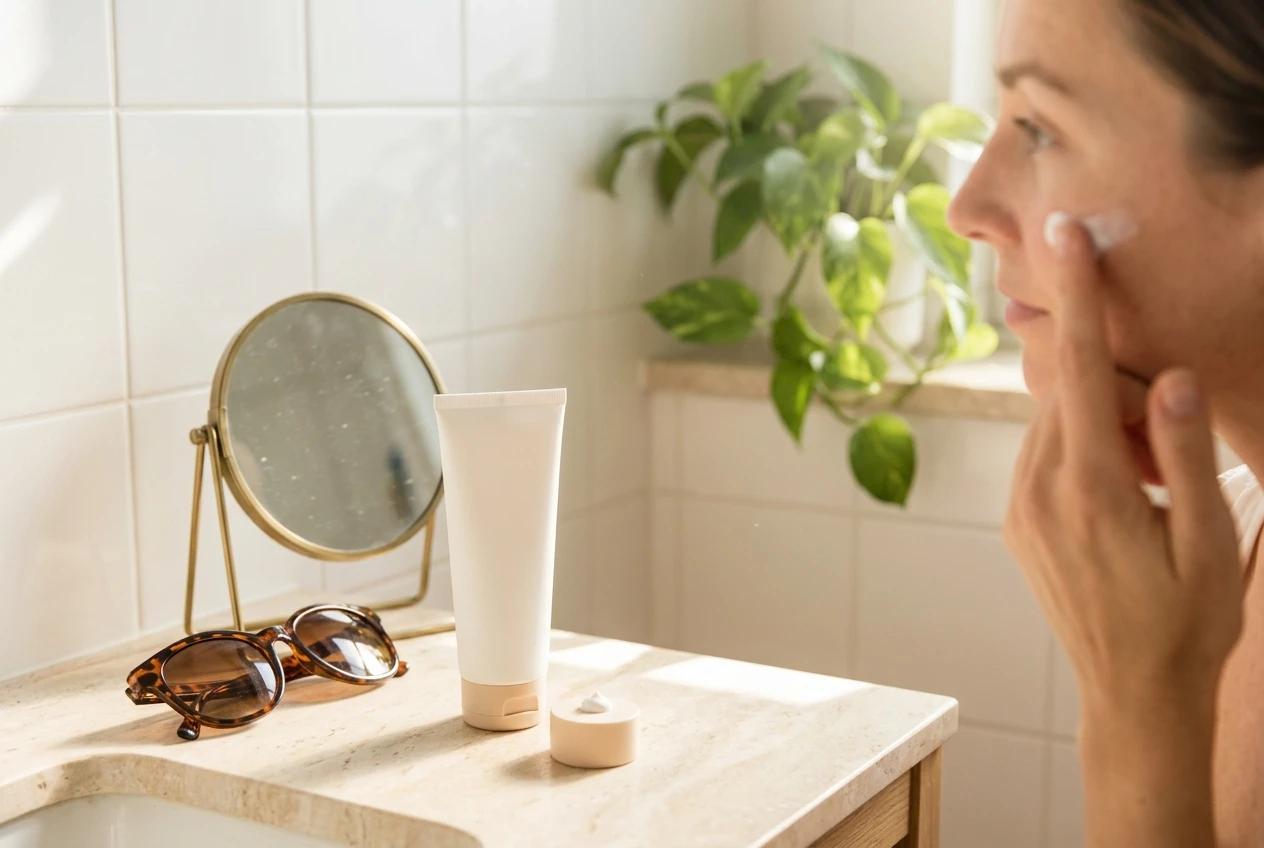
Mineral sunscreens containing zinc oxide or titanium dioxide are usually gentler near the eyes than chemical filters, which can sting if they run into the eye. Apply sunscreen along the orbital bone, and wear sunglasses to reduce squinting and add physical protection. If you are worried that sunscreen will cause breakouts or irritation, the post on sunscreen that doesn’t make you break out covers what to look for.
Sleep, hydration and managing allergies will not remove dark circles, but they can lessen how obvious they look, so they are worth keeping up alongside your products.
Reading an Eye Product Label: A Quick Checklist to Take Shopping
Ingredients are listed from the highest amount to the lowest, so an ingredient named near the end is present in a small amount. Use this list in the store or while browsing online.
- Match the ingredient to your type. Pigment: vitamin C, niacinamide, arbutin, kojic or tranexamic acid. Blue or purple tint: peptides, hyaluronic acid, caffeine, ceramides. Hollows: hydrating ingredients plus a concealer.
- Check that it says it is for the eye area, especially for stronger actives.
- Look for “fragrance-free,” not just “unscented,” which can still contain masking fragrance.
- Scan for common irritants like added essential oils, high amounts of alcohol (denat. alcohol) and menthol.
- Find the packaging. Vitamin C and retinoids break down in light and air, so opaque, airless pumps or tubes are better than open jars.
- Be skeptical of “instant” and “permanent” claims. Brightening takes weeks, and no cream permanently changes vessel position or volume.
- Pick one product to start. A simple formula with one or two well-chosen ingredients is easier to judge than a long list.
Most people will find a single, well-matched ingredient does more than a crowded formula, because you can see whether it works and your skin has less to react to.
If you want gentle, ingredient-by-ingredient skincare picks sent straight to your inbox so you can find what suits your skin without the guesswork, join the email list.