If your face stings after you apply a serum, flushes after you wash it, or breaks out every time you try something new, the instinct is usually to look for a better product. More often, the fix is fewer products. A skincare routine for sensitive skin works best when it is short, boring and consistent, because skin that reacts easily needs fewer chances to react.
This guide walks through why extra steps tend to backfire, how to tell whether your skin barrier is struggling, and a three-step routine you can follow morning and evening. It also covers how to add a new product without losing track of what caused a reaction.
Why sensitive skin gets worse when you add more
Every product you apply is a collection of ingredients, and each ingredient is a possible irritant. A cleanser, toner, serum, treatment, moisturizer and sunscreen can put dozens of different ingredients on your face every day. When skin flares up, it is very hard to know which one is responsible.
Adding products to fix a reaction often makes it worse. Say your cheeks turn red, so you add a soothing serum, then a mask, then an exfoliating product to deal with the dry patches that appeared. Each new item adds another possible trigger, and the skin never gets a quiet period to recover.
There is also a timing problem. Many products are marketed as active treatments for brightening, smoothing or clearing. Used together or too often, they can strip or inflame skin that was already reactive. Sensitive skin usually does not need more activity. It needs fewer demands placed on it.
A stripped-back routine gives you two things: a calmer face, and a clear picture of what your skin tolerates. Both are hard to get any other way.
What your skin barrier does and how to tell yours is struggling
The outermost layer of your skin is called the skin barrier. It does two jobs: it keeps water in, and it keeps irritants, allergens and bacteria out. When it works well, skin feels comfortable and products sit on it without any fuss.
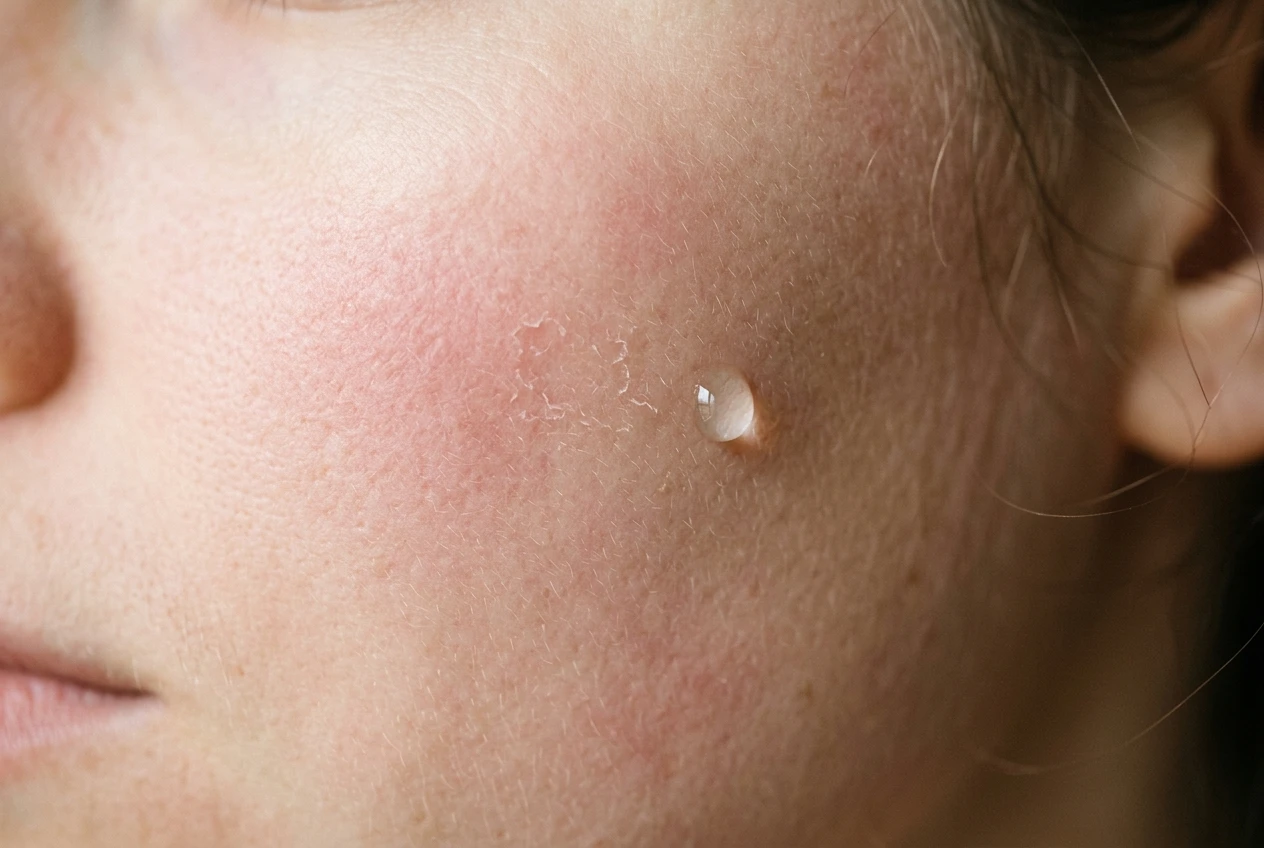
When the barrier is compromised, water escapes more easily and irritants get in more easily. That is why a product you used happily for months can suddenly sting. The product did not change. The barrier did.
Common signs of a struggling barrier include:
- Stinging or burning when you apply products that used to feel fine
- Redness or flushing that lingers
- Tightness, even right after moisturizing
- Flaking, rough patches or a dull look
- Breakouts or small bumps that appear when you have not changed anything about your acne routine
Barrier trouble can come from over-cleansing, hot water, harsh scrubs, too many active ingredients, cold dry weather, or friction from rough towels. Often it is a combination. The common thread is that the skin has been asked to cope with more than it can manage at once.
The goal of a barrier-first routine is to stop whatever is causing damage and give the skin consistent, gentle support while it repairs itself.
The three-step routine that is enough for most mornings and evenings
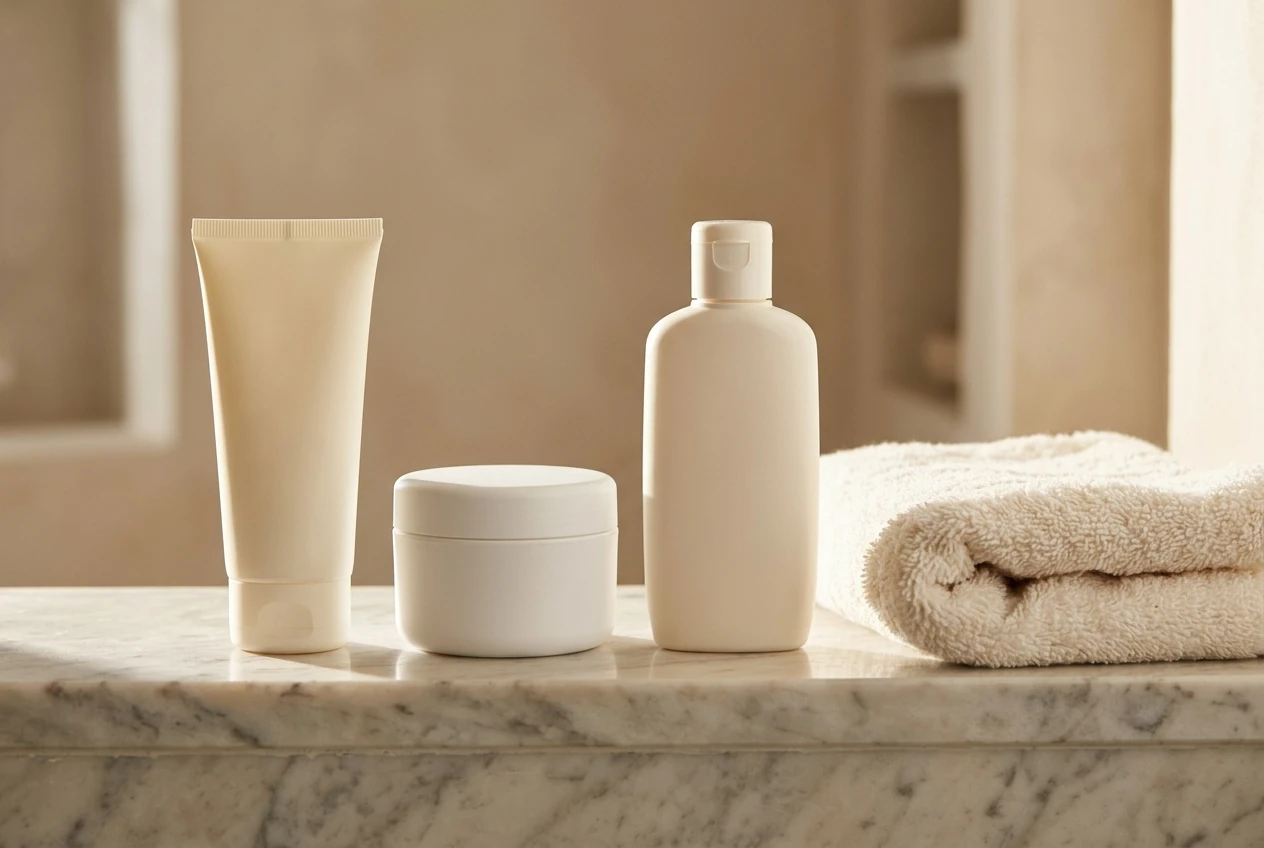
For most people with reactive skin, three products cover what the skin needs: a gentle cleanser, a simple moisturizer and sunscreen.
Morning
- Rinse or cleanse gently. If your skin feels fine in the morning, a splash of lukewarm water may be enough. If you prefer a cleanser, use a small amount and rinse well.
- Moisturize. Apply a plain moisturizer while your skin is slightly damp.
- Apply sunscreen. Use it every day, including cloudy days. Sun exposure can worsen redness and sensitivity, so this step protects the barrier you are trying to rebuild.
Evening
- Cleanse. Use your gentle cleanser to remove sunscreen, oil and the day’s dirt. If you wear makeup, you may need to remove it first with a gentle balm or micellar water formulated for sensitive skin, then cleanse.
- Moisturize. Use the same moisturizer, or a slightly richer one if your skin feels dry at night.
That is the whole routine. Evenings have one fewer step because sunscreen is not needed.
Some practical habits matter as much as the products. Wash with lukewarm water rather than hot. Pat your face dry with a clean, soft towel instead of rubbing. Use your fingertips instead of a cleansing brush or rough cloth. Wait a few minutes after cleansing before applying the next product if your skin feels tender.
Stay with this routine for at least a few weeks before judging it. Skin that has been overworked usually needs time to settle.
How to choose a cleanser, moisturizer and sunscreen without reading every label twice
You do not need to become an ingredient expert. A few simple filters will rule out most poor choices.
Cleanser. Look for a mild, creamy or lotion-style formula labeled fragrance-free and suitable for sensitive skin. Skip anything that leaves your face squeaky or tight after rinsing. That feeling means oils have been stripped away, and a sensitive barrier does not need that.
Moisturizer. Choose a plain, fragrance-free formula. Ingredients you will often see in barrier-supporting moisturizers include glycerin, ceramides and petrolatum or other simple oils and butters. A thicker cream generally holds more moisture than a thin lotion, so pick the texture that matches how dry your skin feels. If your skin is oily or breakout-prone, a lighter gel-cream may feel better.
Sunscreen. Choose a broad-spectrum formula with an SPF of 30 or higher. Many people with reactive skin find mineral sunscreens, which use zinc oxide or titanium dioxide, easier to tolerate than chemical ones, though this varies from person to person. Fragrance-free is the safer choice here too. The best sunscreen is one you will wear every day, so texture and finish matter as well. If a formula leaves a white cast or feels heavy, you are less likely to use it.
A shortcut for labels: scan the ingredient list for fragrance, essential oils and drying alcohols first. If none are present, you have already avoided some of the most common culprits. Then check that the product says what you need it to do and nothing more.
Remember that “dermatologist tested” and “for sensitive skin” on a label are marketing phrases, not guarantees. They are a reasonable starting point, but your own skin has the final say.
Ingredients that commonly irritate sensitive skin and what to look for instead
Reactions are individual, so no list is universal. Even so, certain ingredients are known for causing trouble in reactive skin.
Common irritants to watch for:
- Fragrance and essential oils. Added scents, including natural ones such as lavender, citrus and peppermint, are a frequent cause of stinging and contact reactions.
- Drying alcohols. Denatured alcohol or SD alcohol in a toner or gel can leave skin tight and irritated. Fatty alcohols like cetyl or stearyl alcohol are different and are generally gentle.
- Physical scrubs. Gritty particles can create tiny abrasions and inflame already reactive skin.
- Strong exfoliating acids. Glycolic acid and other alpha hydroxy acids, used often or at high strengths, can overwhelm a delicate barrier.
- Retinoids. Retinol and prescription retinoids are effective for several concerns but commonly cause dryness and redness, especially at the start.
- Harsh foaming cleansers. Strong sulfate-based cleansers can strip the skin.
What to look for instead:
- Glycerin and hyaluronic acid for hydration
- Ceramides and cholesterol to support the barrier
- Petrolatum, squalane and simple plant oils for sealing in moisture
- Short ingredient lists, which leave less to react to
If you are already using several of the irritants above and your skin is struggling, pausing them is a reasonable first step. Bringing back anything you want to keep, one at a time and later, is easier once the skin is calm.
How to patch test and add one new product at a time
Once your skin has been steady on the basic routine for a few weeks, you can think about adding something new. The method matters more than the product.

Patch test first.
- Choose a small area of skin, such as the inside of your forearm, or just behind your ear or along the jawline.
- Apply a small amount of the product once a day for several days.
- Watch for redness, itching, burning, swelling or bumps. If any appear, wash the product off and do not use it on your face.
A patch test is not perfect. It can miss reactions that only show up with repeated use on the face, where skin is thinner and more reactive. It is still worth doing, because it catches the obvious problems cheaply.
Then add one product at a time.
- Introduce the new product on its own, every second or third day at first.
- Keep everything else in your routine the same.
- Give it at least two weeks before deciding whether it helps or harms.
- If your skin stays calm, increase to daily use if the product is meant for that.
- Only after that, consider adding anything else.
Keep simple notes on your phone: the product name, the date you started it, and what you noticed. If a flare-up happens later, those notes tell you where to look. Without them, you are guessing.
If you react, stop the new product, return to the three-step routine and let your skin settle before trying anything else.
When to see a dermatologist instead of trying another product
Some skin problems are not product problems. A dermatologist can identify conditions that look like sensitivity but need medical treatment, and no cleanser or moisturizer will resolve them.
Make an appointment if:
- Redness, burning or flushing continues for weeks even on a very simple routine
- You have swelling, blistering, oozing or an itchy rash
- You get persistent bumps, pimples or visible small blood vessels on the central face, which can point to conditions such as rosacea
- You suspect eczema or a contact allergy
- Your skin is painful, or a reaction is spreading
- Over-the-counter products have made things worse repeatedly
Bring a list of the products you use and any notes you have kept. They help the dermatologist work out what is going on much faster. A professional can also advise on prescription options and run proper allergy testing if needed.
If your face swells significantly or you have trouble breathing after using a product, seek urgent medical care.
Where to go next if wrinkles, dark circles or crow’s feet are your main concern
A calm barrier makes everything else easier. Once your skin is steady and comfortable, you will be in a better position to address other concerns without provoking another flare-up.
If dark circles and fine lines around the eyes are what bother you most, these natural ways to fade dark circles and soften crow’s feet suit gentle approaches and build on the same go-slowly principle. For wrinkles, take the barrier-first habits from this guide with you and add anything new one product at a time.
Join the email list for a free one-page gentle routine checklist and new sensitive-skin guides sent to your inbox.