Breakouts along your jaw at 42 can feel like an insult, especially when you are also noticing fine lines and a dry patch or two. Adult acne in women over 30 is common, and it responds to a different approach than the one that worked on teenage skin. This guide covers why it happens, what a gentle routine looks like, which ingredients are worth knowing, and when a doctor should be involved.
Why Acne Shows Up (or Comes Back) in Your 30s, 40s and Beyond
Acne forms when a pore gets clogged with oil and dead skin cells, bacteria in the pore multiply, and the surrounding skin becomes inflamed. Hormones influence how much oil your skin makes and how sensitive your oil glands are to the hormones circulating in your body. That is why so many women see changes at points when their hormones shift.
Common triggers include:
- The menstrual cycle. Many women get breakouts in the week or so before a period.
- Perimenopause and menopause. As estrogen levels fall, the balance between hormones changes, and some women see new breakouts at an age when they assumed acne was behind them.
- Coming off or starting hormonal birth control, and other changes in medication.
- Stress. Ongoing stress raises cortisol, which can increase oil production and make existing inflammation worse.
- Skincare and makeup that clog pores. Rich creams, heavy foundations and some hair products can contribute, especially along the hairline and jaw.
- Family history. If acne runs in your family, you may be more prone to it at any age.
Sometimes the cause is a mix of several of these, and sometimes it is hard to pin down. Skin conditions such as rosacea can also look like acne, which is one reason a persistent problem deserves a professional opinion (more on that below).
How Adult Acne Differs From Teen Acne, and Why the Old Fixes Backfire
Teen acne usually appears across the forehead, nose and chin (the “T-zone”), and the skin is typically oily everywhere. Adult acne tends to show up differently. It often clusters on the lower face: the jawline, chin and around the mouth. The blemishes are frequently deeper, tender bumps rather than a spread of blackheads, and they can linger for weeks.
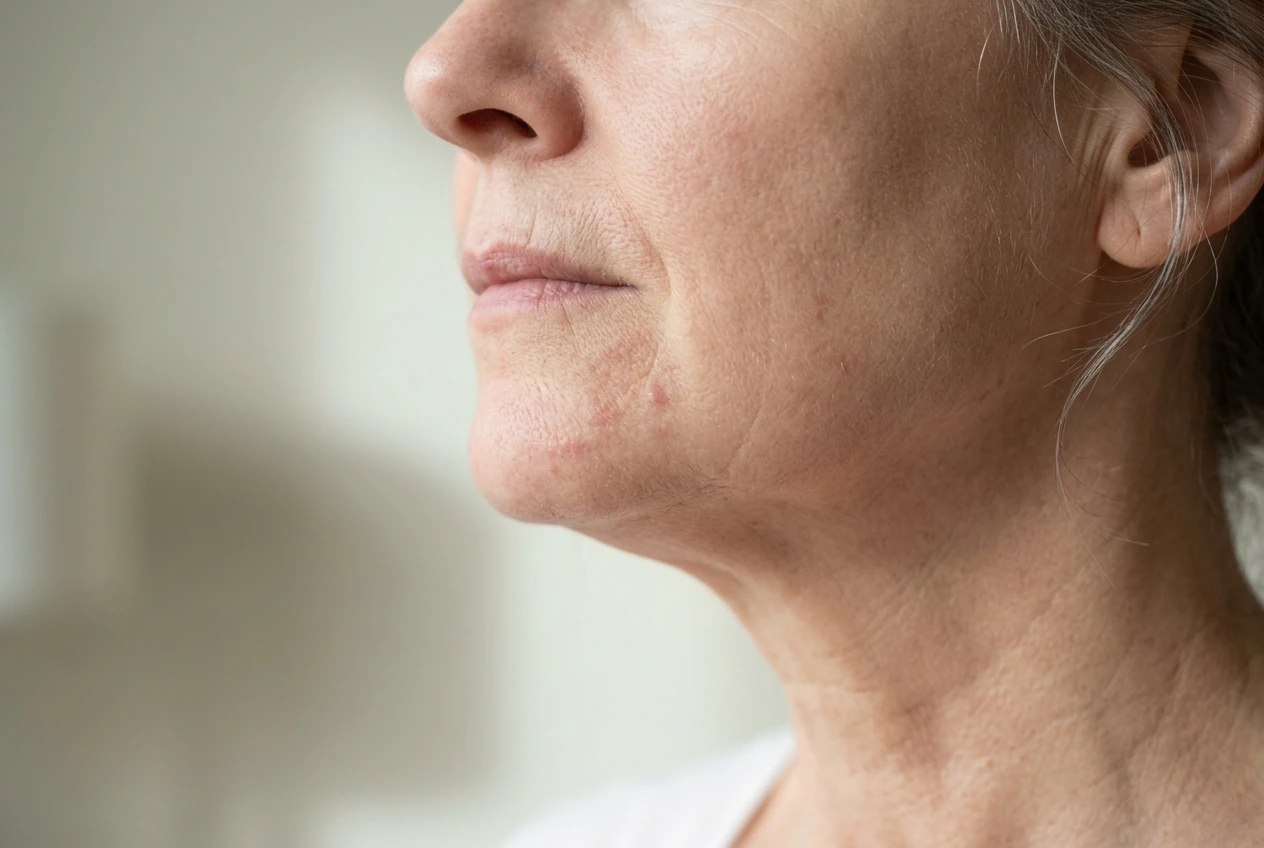
The skin underneath has also changed. Over the years, skin produces less natural oil and renews itself more slowly, and its protective barrier can become easier to disturb. Skin can be oily in some places and dry or tight in others at the same time.
That is why the classic teen routine backfires. Strong foaming cleansers, alcohol-based toners, gritty scrubs and layers of drying spot treatments strip the barrier. A damaged barrier leads to redness, flaking, stinging and often more breakouts, and dry, irritated skin also makes fine lines look more pronounced. The goal for adult skin is to calm inflammation and keep pores clear while protecting the barrier.
A Gentle Morning and Evening Routine That Clears Breakouts Without Drying You Out
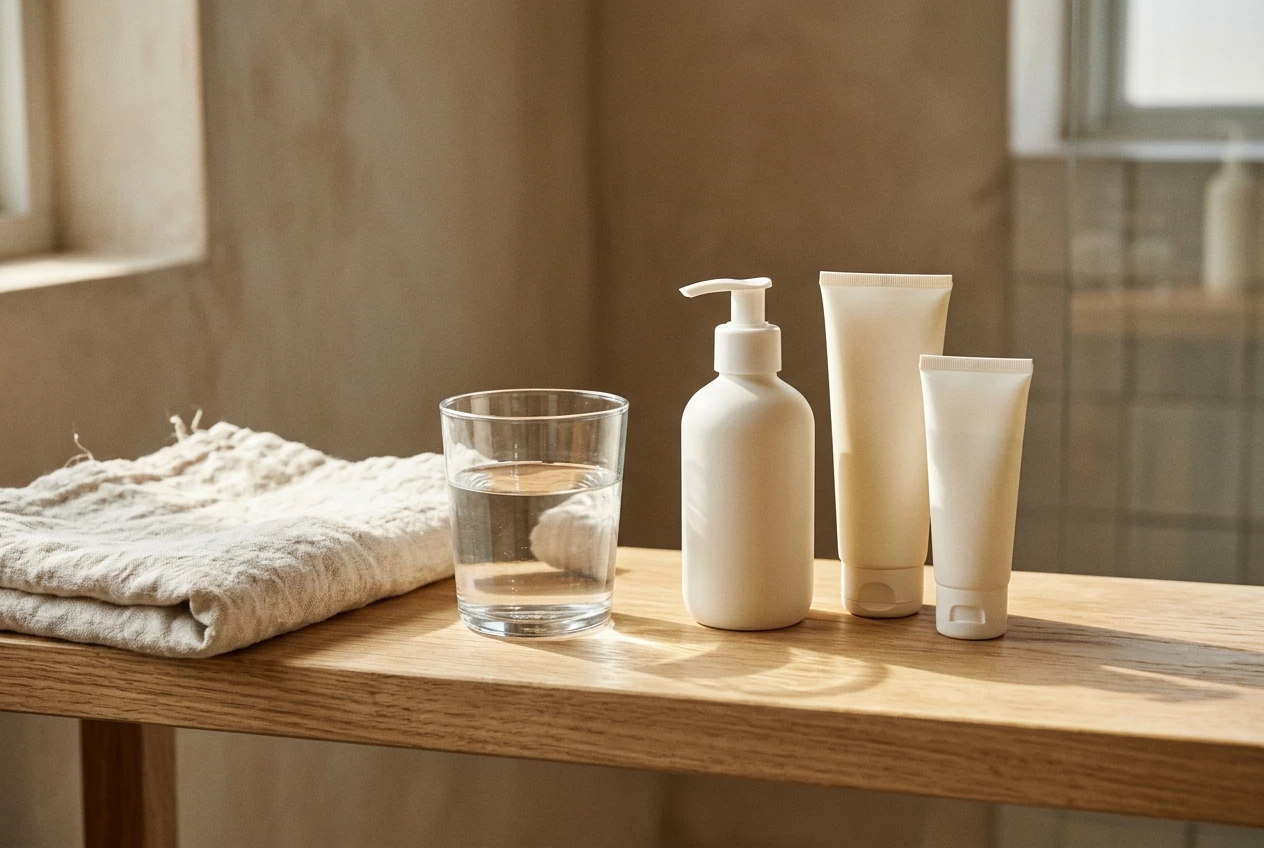
A simple routine you can stick with beats a long one that irritates your skin. Add one new product at a time so you can tell what helps and what does not.
Morning
- Cleanse lightly. Use a gentle, non-foaming or low-foaming cleanser, or simply rinse with lukewarm water if your skin feels dry in the morning. Hot water adds to irritation.
- Apply a treatment if you use one. This might be niacinamide or azelaic acid (see the ingredients section below).
- Moisturize. Choose a lightweight, fragrance-free moisturizer labeled non-comedogenic, which means it is formulated not to clog pores. Breakout-prone skin still needs moisture, and skipping it often makes dryness and oiliness worse.
- Use sunscreen every day. Sun exposure darkens the marks that breakouts leave behind and speeds up visible aging. Look for a broad-spectrum sunscreen, SPF 30 or higher, in a lightweight or gel-cream texture that does not feel heavy on your skin.
Evening
- Remove sunscreen and makeup. If you wear either, cleanse twice: first with a gentle cleansing balm, oil or micellar water, then with your regular gentle cleanser. Leftover product in the pores can feed breakouts.
- Apply your active treatment. This is where a retinoid, benzoyl peroxide or salicylic acid would go if you use one. Start with two or three nights a week, and apply to dry skin to reduce stinging.
- Moisturize. Use the same lightweight moisturizer, or a slightly richer one on nights you use a retinoid, as long as it stays non-comedogenic.
Do not use every active on the same night. One treatment at a time, on a schedule your skin tolerates, is enough for most people.
Active Ingredients Worth Knowing: What Each One Does and Who Should Be Careful
The ingredient list on a label matters more than the marketing on the front. These are the actives most commonly used for adult breakouts.
Retinoids (including adapalene and retinol). These speed up cell turnover so pores are less likely to clog, and they also help with fine lines and uneven texture, which makes them useful for breakouts and aging together. Adapalene is the retinoid available without a prescription that is specifically aimed at acne, and stronger options such as tretinoin require a prescription. Expect dryness and peeling at first. Retinoids are not for use during pregnancy or while trying to conceive, so ask your doctor if that could apply to you. They also make skin more sun-sensitive, so sunscreen is essential.
Benzoyl peroxide. It reduces the bacteria involved in breakouts and works well on inflamed pimples. It can be very drying and irritating, so lower strengths used on just the affected areas, or as a short-contact wash, are a gentler way in. It can bleach towels, pillowcases and hair, so keep that in mind.
Salicylic acid (BHA). It dissolves oil inside pores and suits blackheads and clogged areas. It can dry skin, so use it in a low concentration and less often if you feel tightness. People who are sensitive to aspirin should check with a doctor or pharmacist first, since salicylic acid is related.
Azelaic acid. It calms redness, reduces bumps and helps fade the dark marks that breakouts leave. It is generally considered a gentle choice and is a good option for skin that reacts easily. Some people feel mild tingling when they begin.
Niacinamide. A form of vitamin B3 that supports the skin barrier and can help with oiliness, redness and the look of enlarged pores. It is well tolerated by most people, though a few get flushing or irritation, especially from higher concentrations.
Hyaluronic acid and ceramides. These are not acne treatments. They hydrate and support the barrier, which makes it easier for your skin to tolerate the treatments above.
As a rule, start one active at a time, patch test on a small area (such as beside your jaw) for a few days, and increase frequency slowly. Combining several strong actives at once is the most common way to end up irritated.
What to Avoid When Your Skin Is Breaking Out and Aging at the Same Time
Some habits make both concerns worse, so they are worth dropping first.
- Scrubs and cleansing brushes. Physical exfoliation roughens an already sensitive surface and can spread inflammation.
- Alcohol-heavy toners and astringents. They leave skin tight and can weaken the barrier.
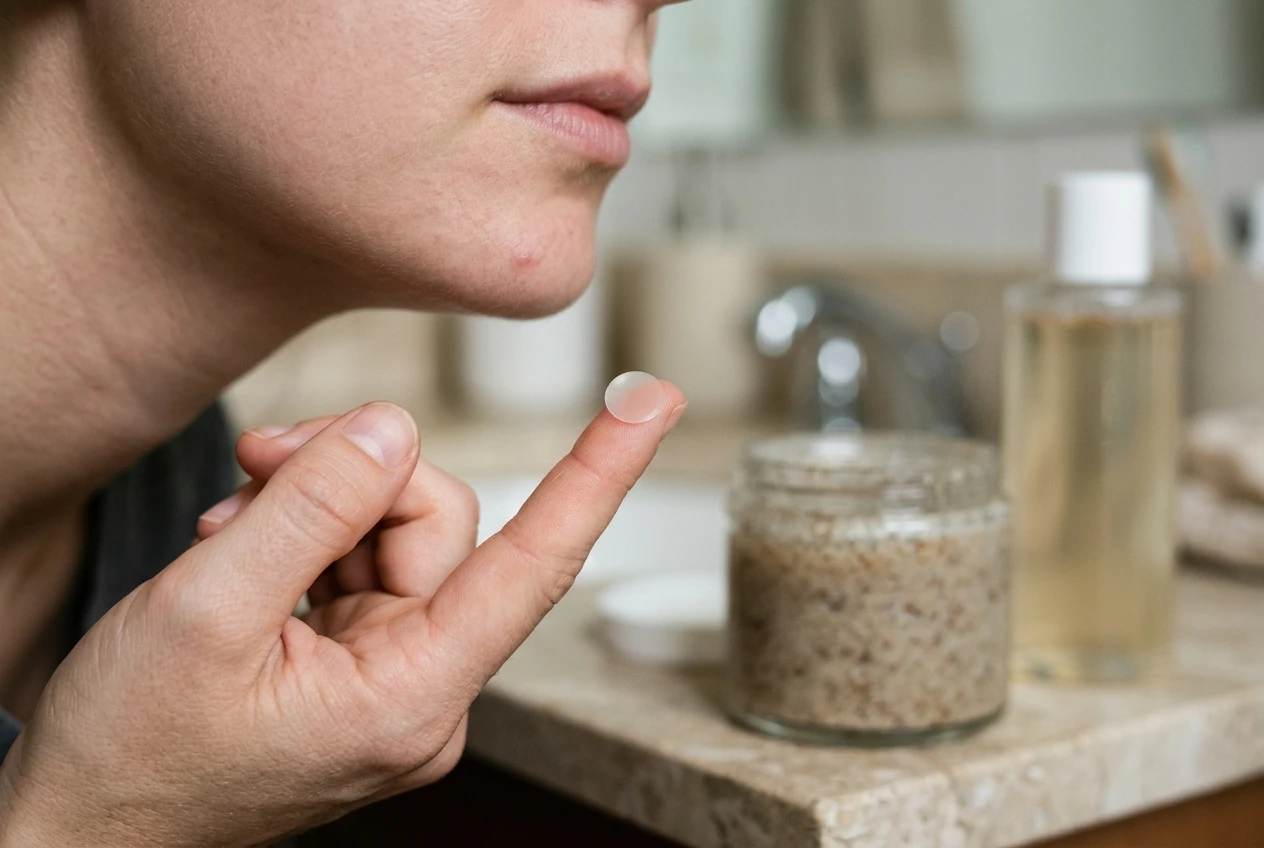
- Picking and squeezing. This pushes bacteria deeper, lengthens healing time and raises the chance of scars and dark marks. If a spot needs attention, a hydrocolloid pimple patch can protect it and keep your hands off.
- Layering many actives. A retinoid, a strong acid and benzoyl peroxide in one routine is more than most adult skin can handle.
- Heavy, pore-clogging products. Thick oils and rich creams that suit dry, mature skin may not suit a chin that is breaking out. Choose lighter textures, and keep richer products for the areas that are dry.
- Skipping sunscreen. Breakout marks last longer with sun exposure, and sun is the largest driver of visible aging.
- Changing products every week. Skin cannot show you what works if the routine keeps changing.
If you want to see how to handle the aging side of your skin more fully, the anti aging skincare routine for your 40s covers it in more depth, and it fits well alongside the gentle approach here.
Calming Breakouts If Your Skin Is Also Sensitive
Sensitive skin stings, flushes or reddens easily, and breakouts can make it more reactive. The approach is to do less, more slowly.
Choose fragrance-free products, since fragrance and many essential oils are common triggers. Use azelaic acid or niacinamide as your first treatment, because both tend to be gentle. If you want a retinoid or benzoyl peroxide, begin with a low strength once or twice a week, and consider applying moisturizer first, then the treatment, then a little more moisturizer. This “buffering” lowers the intensity while the skin adapts.
Watch for signs that you have gone too far: stinging when you apply a basic moisturizer, persistent redness, flaking or a tight, shiny look. If you see them, stop all actives for a week or so, keep to a gentle cleanser, moisturizer and sunscreen, and then reintroduce one product at a time at a lower frequency.
When It’s Time to See a Dermatologist or Doctor
Over-the-counter products work for mild to moderate breakouts. A professional can help when they do not. Consider making an appointment if:
- You have deep, painful cysts or nodules, which often scar and rarely respond to store-bought products.
- Your breakouts have not improved after about three months of consistent, gentle care.
- Acne is leaving dark marks or scars.
- Breakouts come with other changes, such as irregular periods, excess hair growth on the face or body, or thinning hair on the scalp. These can point to a hormonal condition that is worth investigating.
- Your skin is very red or flushed, with bumps, which can be rosacea rather than acne.
- Your acne is affecting your confidence or mood.
- You take medications or are pregnant, breastfeeding or planning a pregnancy, and want to know which products are safe.
Doctors can offer treatments that are not available over the counter, including prescription topicals, oral medications, and in some cases hormone-related options. A dermatologist can also check whether a different skin condition is involved. A visit does not mean your routine failed. Some breakouts need more than skincare can do.
How to Give a New Routine Enough Time to Work
Skin renews itself slowly, and that is more true as we get older. Most dermatologists suggest giving a new routine around 8 to 12 weeks before judging it. Pimples already forming under the surface will still appear in the first weeks, and some actives, retinoids especially, can cause a temporary flare of breakouts while the skin adjusts.
A few things make the wait easier:
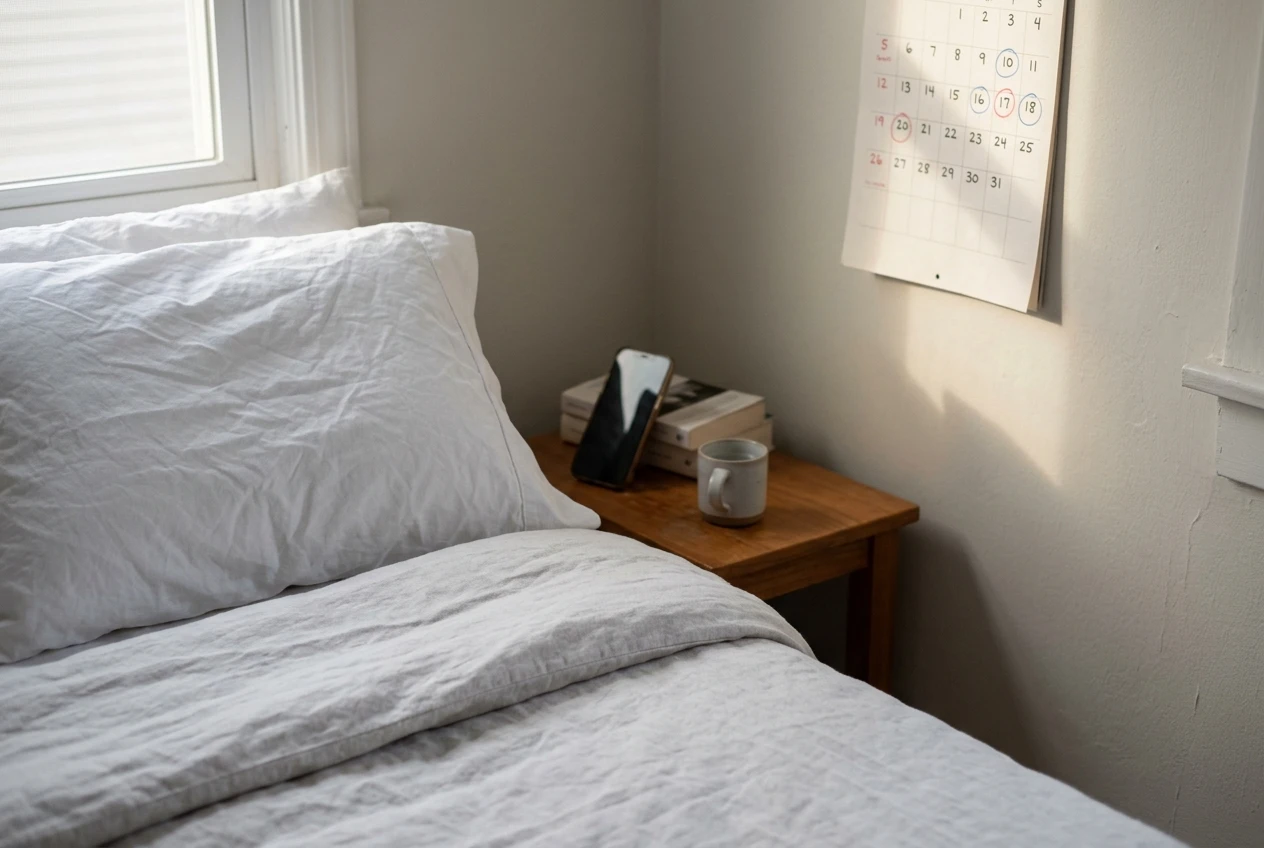
- Change one product at a time, and wait at least two weeks before adding the next.
- Take a photo every two weeks in the same light. Progress is easy to miss in the mirror and obvious in photos.
- Look for the right signs early. Fewer new breakouts, smaller spots and quicker healing come before clear skin does.
- Be consistent. An evening routine used three nights a week for a month tells you less than a simple routine used every day.
- Keep your pillowcase and towels fresh, changing pillowcases a couple of times a week.
If you are irritated and uncomfortable, ease off rather than push through. Calm skin heals better than stressed skin.
Get a Gentle Weekly Skincare Note
If you would like help choosing products that suit your skin, join the email list for a free, gentle weekly skincare note with product picks matched to your skin concern, whether that is breakouts, dryness, fine lines or something else.
And if your skin reacts easily to almost everything, start with this calmer skincare routine for sensitive skin, which shows how a short routine can do more than a crowded shelf.