If you have breakout-prone, sensitive skin and you’ve stopped wearing sunscreen, you probably had good reasons. A sunscreen that stung your eyes, left a white film, or was followed by a week of new bumps is easy to give up on. The trouble is that skipping daily SPF leaves skin exposed to the UV light that can darken marks left by breakouts and add to wrinkles and sun spots over time.
The good news is that the problem is usually the particular formula, not the idea of sunscreen. This article goes through the five most common reasons women skip it, answers each one, and then gives you a simple way to read a label and try a new product without a big reaction. If you’re searching for the best sunscreen for acne-prone sensitive skin, knowing what to look for matters more than any single brand name.
The real reason so many women quit sunscreen (and why it’s not your fault)
Most women who avoid sunscreen give one of five reasons:
- “It clogs my pores.”
- “It stings.”
- “It’s greasy and heavy.”
- “I’m indoors most of the day, so I don’t need it.”
- “My makeup already has SPF.”
The first three come from real experience. Many sunscreens were designed for beach days, not for faces that react easily. They can be thick, strongly fragranced, or loaded with ingredients that irritate reactive skin. If you tried a few and your skin protested, you drew a reasonable conclusion from what you had in front of you.
The last two come from understandable assumptions about how sun exposure works, and they’re worth a second look. Each is covered below.
Sunscreen formulas vary a lot, and you can learn to tell a gentle one from a harsh one before you buy it. That’s most of what this article is about.
Myth: sunscreen always clogs pores
Some sunscreens do contribute to breakouts, usually because of heavy oils, rich emollients, or a texture that sits on top of skin and doesn’t let go at the end of the day. But “sunscreen” is a huge category, and it includes lightweight lotions, fluids, gels, and milks that are made for oily and acne-prone skin.
Look for products labeled “non-comedogenic,” which means the formula was designed to avoid blocking pores. The label is a helpful hint, but it isn’t a guarantee, since the term isn’t tightly regulated. Treat it as a good first filter and let your own skin make the final call.
Two other habits can make a good sunscreen seem like a bad one:
- Not washing it off properly. Sunscreen is built to stay put, so a quick splash of water at night may not be enough. A gentle cleanser used in the evening helps. If you’re still choosing one, the post on gentle cleansers for sensitive, breakout-prone skin covers what to look for.
- Layering too much. A thick moisturizer, a heavy primer, and a rich sunscreen stacked together can feel like a lot for skin that breaks out. Sometimes swapping the moisturizer for a lighter one, or using a sunscreen that doubles as your moisturizer, makes the difference.
If you’ve been breaking out and aren’t sure whether sunscreen is the cause, don’t assume. Skin can break out for many reasons, including hormones, stress, and new products added at the same time. Changing one thing at a time is the only way to find out.
Mineral or chemical: which tends to feel kinder on reactive, breakout-prone skin
Sunscreens work with two families of UV filters, and knowing which is which helps you shop.
Mineral sunscreens use zinc oxide, titanium dioxide, or both. They sit on the surface of the skin and reflect and scatter UV light. Chemical sunscreens use filters such as avobenzone, octocrylene, or oxybenzone, which absorb UV light and convert it to heat in the skin.
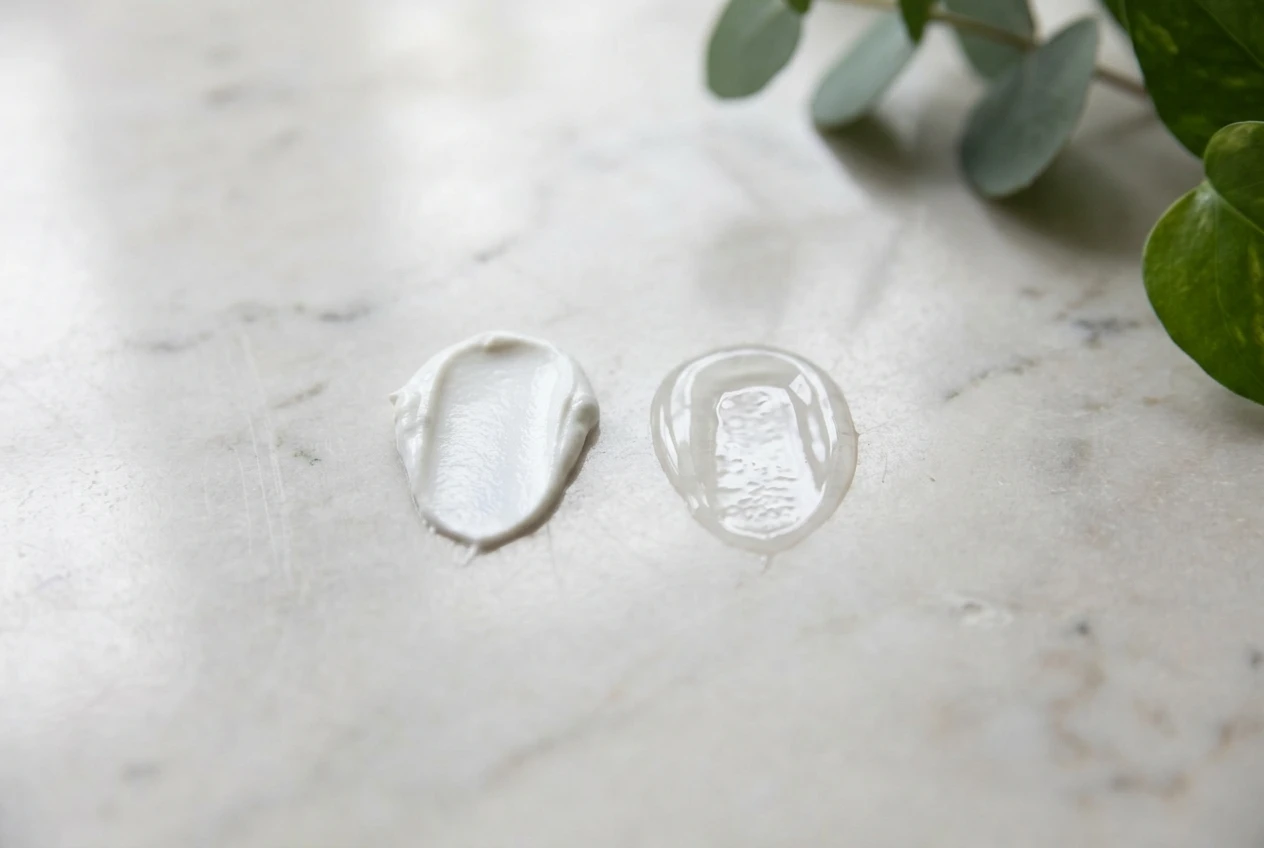
Many people with sensitive, reactive skin find mineral formulas gentler. Zinc oxide in particular is a common ingredient in products made for sensitive skin and is also found in some diaper creams, so it has a reputation for being calm on the skin. Mineral formulas are also less likely to sting around the eyes.
Mineral sunscreens have trade-offs, though. Older or very concentrated formulas can leave a white or gray cast, and some feel dry or thick. Newer formulas, including tinted ones, tend to blend more easily, and a tint can help the sunscreen look like part of your skin tone. Texture varies a lot between products.
Chemical sunscreens often feel lighter and rub in without a cast, which is why some women prefer them. But some people find that certain chemical filters sting or trigger redness, especially near the eyes. Skin is individual, so there’s no rule that one type is right for everyone.
A reasonable approach for reactive skin is to start with a mineral formula, and if the texture bothers you, try a chemical one that’s fragrance-free. Whichever you pick, you’re better off with a sunscreen you’ll wear every day than a perfect one that stays in the drawer.
How to read a sunscreen label when your skin is sensitive
Sunscreen labels are crowded, but you can narrow them down quickly. Start with the front of the bottle, then check the ingredient list.
On the front
- Broad spectrum. This means the product protects against both UVA and UVB rays. It’s the most important phrase to find.
- SPF 30 or higher. Dermatology organizations commonly recommend SPF 30 or above for daily use.
- Non-comedogenic. A helpful signal for breakout-prone skin, as discussed above.
- Fragrance-free. Note that “unscented” is different. An unscented product may contain ingredients that mask odor, so “fragrance-free” is the safer phrase for sensitive skin.
- Formulated for sensitive skin or for the face. Face formulas are usually lighter than body sunscreens.
In the ingredient list
Scan for ingredients that commonly bother reactive skin: added fragrance or “parfum,” essential oils such as lavender or citrus oils, and denatured alcohol listed high on the list. These can sting or dry out skin that is already irritated. If you have a known allergy to a particular ingredient, check for it by name every time you buy, because formulas change.
If you’re using prescription acne treatments, ask your doctor or pharmacist about sun protection. Some treatments can make skin more sensitive to sunlight, which makes a daily sunscreen more important, not less.
A shorter ingredient list isn’t automatically better, but it gives you fewer possible culprits if your skin does react.
Myth: I only need SPF on sunny days, or my makeup covers it
UV light doesn’t disappear when the sky is gray. UVA rays, the type linked to skin aging, are present through the day and can pass through clouds and through window glass. If you sit near a window at home, drive a car, or walk to the mailbox, your face is getting some exposure, even if it’s small on any single day. Those small amounts add up over the years.

That’s why most skin professionals suggest making sunscreen a daily habit rather than something reserved for beach trips. For a breakout-prone face, daily protection has an added benefit: sun exposure can darken the marks that breakouts leave behind, so they take longer to fade.
Makeup with SPF is a nice extra, but it rarely does the full job on its own. To get the SPF number on the label, you’d need to apply a fairly generous amount of product, much more than most people use in a foundation or powder. A thin layer of makeup gives you some protection, but less than the number suggests. Powders with SPF are even harder to apply in a protective amount.
A simple answer is to use a sunscreen as your base layer and treat the SPF in your makeup as a bonus. If you wear makeup, a lightweight or tinted sunscreen under it can keep the routine from feeling heavy.
Where sunscreen fits in a calm routine, and how to patch test a new one
In a morning routine, sunscreen goes last among your skincare steps, after any moisturizer and before makeup. A gentle routine might be as simple as cleanse (or rinse), moisturize, and apply sunscreen. If you’re building or simplifying a routine, the post on a calmer skincare routine for sensitive skin goes into how few steps you really need.
Use enough sunscreen to cover your whole face, including your jawline, the sides of your neck, and your ears. A common guideline is about a quarter teaspoon for the face, though the right amount depends on the product’s texture and instructions. Reapply if you’ll be outdoors for long stretches.
How to patch test a new sunscreen
Sensitive skin deserves a slow introduction. Here is a simple way to try a new product:
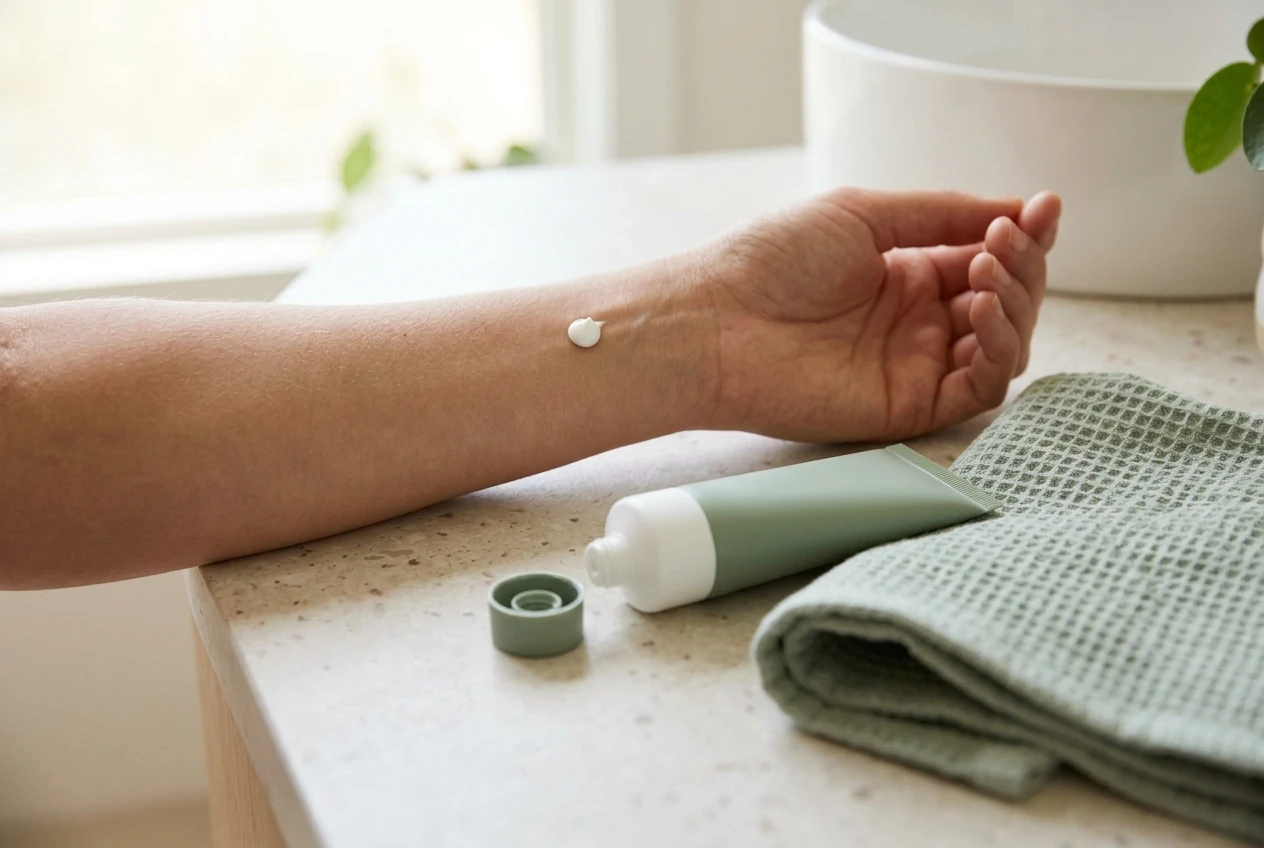
- Test a small area first. Apply a small amount to the inner forearm or just behind your ear once a day for two or three days. Watch for redness, itching, burning, or bumps.
- Move to a small area of your face. If the first test goes well, use it on one spot, such as along the jawline, for a few more days.
- Then use it on your whole face. If your skin stays calm, apply it as part of your normal morning routine.
- Change only one product at a time. If you start a new sunscreen and a new serum in the same week and break out, you won’t know which one caused it.
- Give it time. Skin often needs a couple of weeks before you can judge whether a product suits it.
If a product causes stinging, swelling, or a spreading rash, rinse it off with cool water and stop using it. If a reaction is strong or doesn’t settle down, a doctor or dermatologist can help. A patch test lowers the chance of a reaction but doesn’t remove it entirely.
If your skin is already irritated or dried out from acne treatment, give it time to settle first. The article on what to put on your face after acne treatment dries you out can help you decide what to use in the meantime.
A gentle starter checklist for choosing your first (or next) sunscreen
Keep this list in mind next time you’re standing in the sunscreen aisle or scrolling through product pages:
- The label says broad spectrum and SPF 30 or higher.
- It’s made for the face, and labeled non-comedogenic.
- It’s fragrance-free, and the ingredient list has no added essential oils or alcohol near the top.
- You’ve considered a mineral formula (zinc oxide or titanium dioxide) if your skin tends to sting or turn red.
- You’ve decided whether a tint would help you avoid a white cast.
- You plan to patch test on your arm or jawline before using it on your whole face.
- You’re changing one product at a time, so you’ll know what your skin is reacting to.
- You have a plan to wash it off gently at night.
If the first sunscreen you try doesn’t work out, that tells you something useful about your skin, such as whether it prefers mineral or chemical filters, or a lighter texture. Each try narrows the field until you find one you can wear every day without thinking about it.
Get a sunscreen shopping checklist you can take with you
If you’d like a printable version of the list above, join the email list. You’ll receive a free, easy-to-follow sunscreen shopping checklist for sensitive, breakout-prone skin, along with a short note on trying one new product at a time so your skin has room to tell you what it likes.