If you already use a face cream you like, it’s fair to wonder whether you need eye cream too. Eye creams cost more per ounce than most moisturizers, and the jars are tiny. The honest answer to “do you need eye cream if you use face cream” is: sometimes. For many people a gentle face cream does the job. For others, a separate eye cream solves a real problem.
This guide helps you work out which group you’re in, so you can spend your money only where it helps.
Why the skin around your eyes isn’t quite the same as the rest of your face
The skin on your eyelids and just under your eyes is noticeably thinner than the skin on your cheeks or forehead. It also has fewer oil glands, so it makes less of its own moisture and dries out faster. Because it’s thin, small changes show up there first: fine lines, a bluish or shadowed tint where blood vessels sit close to the surface, and a slightly crinkled texture when the skin is dehydrated.
That area is also more reactive. It’s close to your eyes, so anything that migrates from your forehead or cheeks (a strong active, a fragrance, a sunscreen filter) can sting or redden the skin. Rubbing, tugging at makeup and squinting in bright light add wear on top of that, and this is why crow’s feet often appear before other lines.
None of this means the eye area needs a completely different set of ingredients. It needs gentler handling and steady moisture, and it needs protection from the sun.
What eye creams are actually designed to do differently
Most eye creams differ from face creams in a few practical ways rather than a magical one.
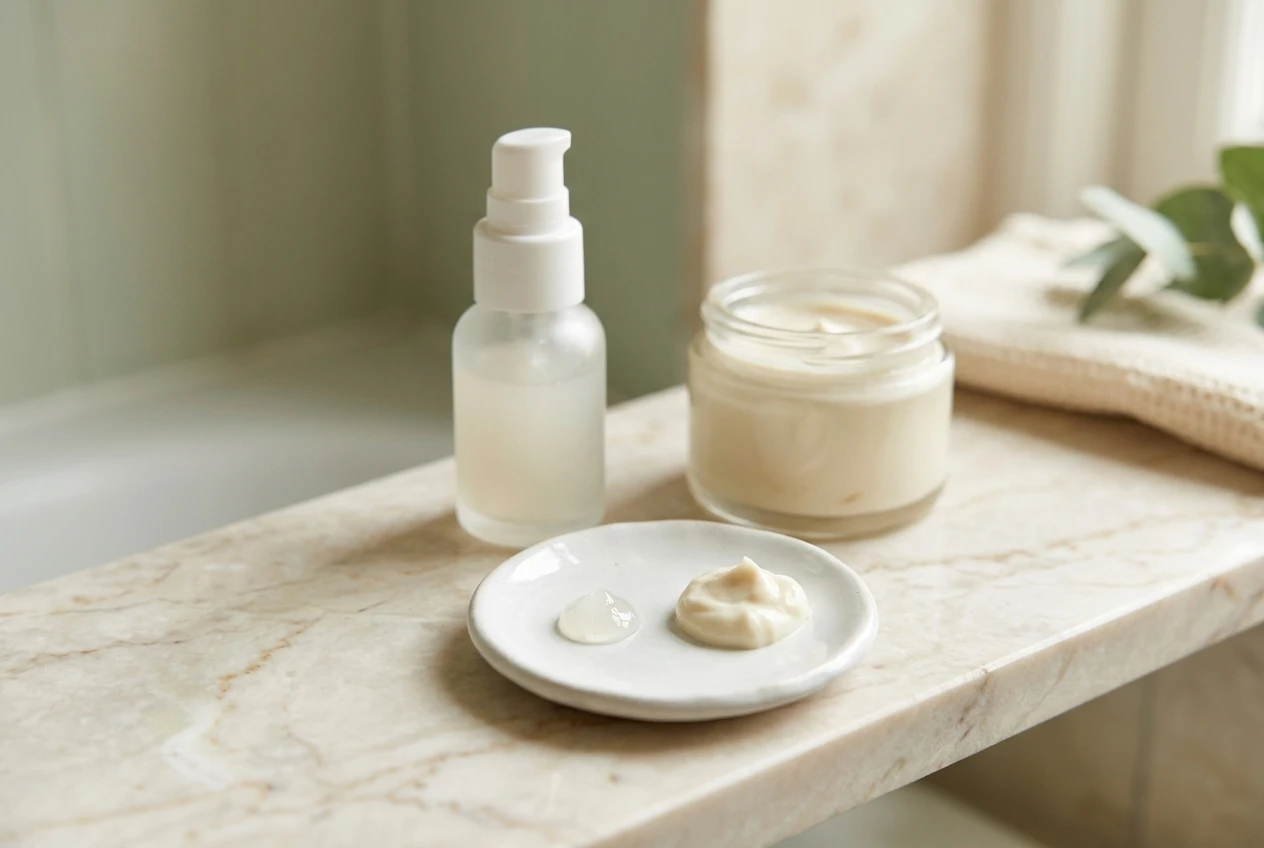
- Texture. They are usually lighter or gel-like, so they sit comfortably on thin skin and are less likely to feel heavy or migrate into the eye.
- Fewer irritants. Many are made without fragrance and with a shorter ingredient list, because the area reacts easily.
- Targeted extras. Some include ingredients aimed at puffiness, dull-looking shadows or fine lines, such as caffeine, peptides or a mild vitamin C.
- Packaging. Small tubes and pumps keep the amount you use small, which suits the small area.
Notice what’s not on that list: a different kind of moisturizing. A well-made face cream hydrates skin in much the same way an eye cream does. A label that says “eye” tells you about the intended use, not about a special ingredient only that product can offer. Some brands also use claims like “ophthalmologist tested,” which is worth noticing but isn’t a guarantee that your skin will tolerate the product, so patch testing still matters.
Can you use your face cream around your eyes? A simple yes, no, and it depends
Here’s a plain way to sort it.
Yes, if your face cream is gentle and simple. A fragrance-free moisturizer built around ingredients like glycerin, ceramides or hyaluronic acid is generally fine near the eyes. If you already use it daily without stinging or puffiness, there’s usually no reason to switch. Apply a small amount and keep it to the bony ridge around the eye rather than right up to the lash line.
No, if it contains strong actives or a lot of fragrance. Face products with prescription-strength or high-percentage retinoids, exfoliating acids (glycolic, salicylic or lactic), or heavy perfume are common causes of irritation when they drift to the eyelids. If your face cream is an active treatment product, keep it away from that area and use a plainer moisturizer there instead.
It depends if your face cream is very rich. Thick, oily creams can feel greasy under the eyes, and for some people they can contribute to tiny white bumps called milia or to morning puffiness. If that happens, a lighter product on the eye area is a sensible swap, and it needn’t be a special eye cream. A light gel moisturizer would do the same thing.
If you want more on keeping a routine for reactive skin simple, the post on why sensitive skin needs a calmer routine rather than more products covers that thinking in more depth.
When a separate eye cream is worth it: dark circles, crow’s feet, and crepey skin
A separate eye cream earns its place when your face cream can’t do something the eye area needs. Three situations come up most often.
Dark circles
Dark circles have several different causes, and a cream only helps with some of them. Pigmentation (brownish tones) may respond over time to ingredients like vitamin C or niacinamide. Bluish or purplish shadows come from thin skin showing the blood vessels beneath, and a cream can only plump the surface a little. Shadows caused by the shape of your under-eye area, and circles that run in families, are not something a product will erase.
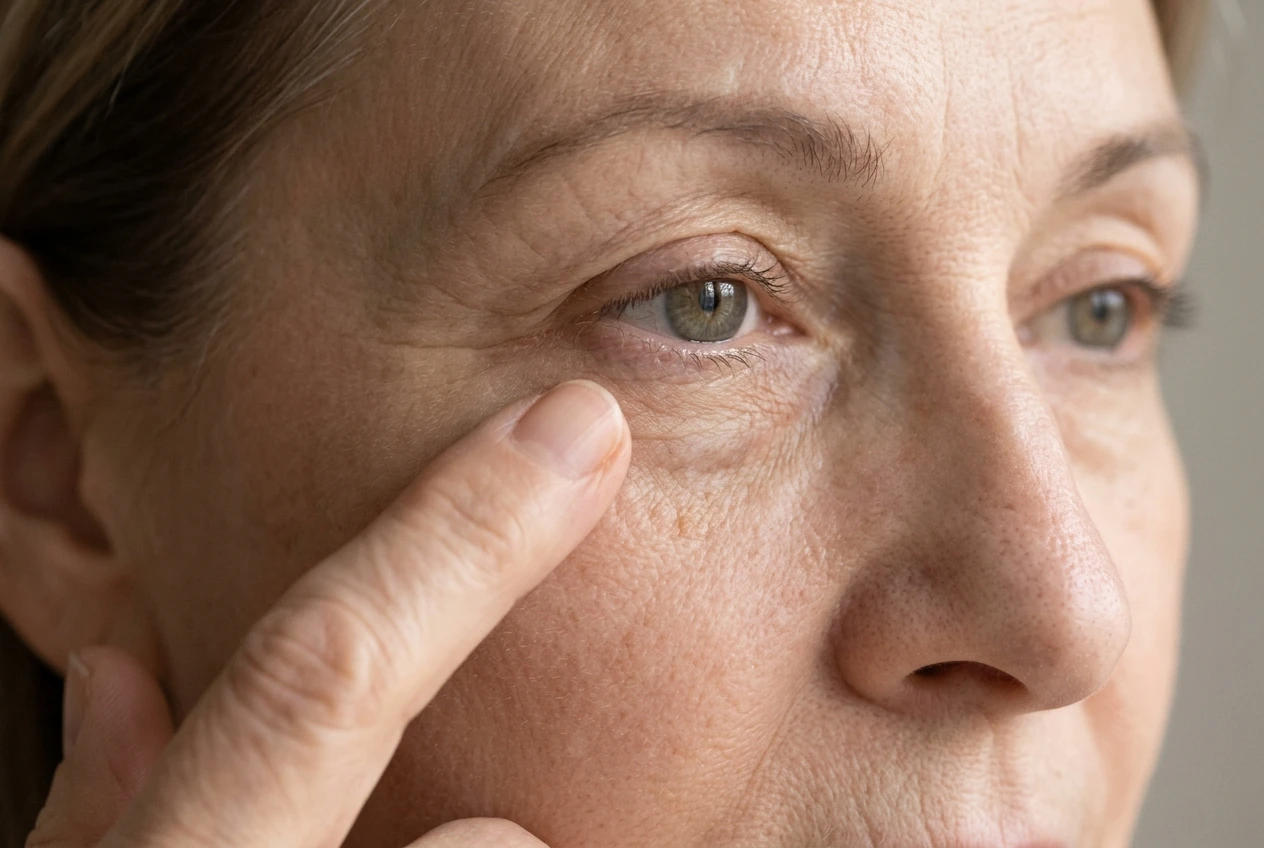
An eye cream is worth trying if your dark circles look brownish or dull and you want a formula designed for that area. If the circles are blue-toned or structural, expect modest improvement at best, and don’t buy a pricier jar hoping for more. For gentler habits that sit alongside products, see natural ways to fade dark circles and soften crow’s feet.
Crow’s feet
Fine lines at the outer corners of the eyes are partly dryness and partly the repeated movement of smiling, squinting and laughing. A moisturizer of any kind can soften the look of dehydration lines, which is why a plain face cream often works. A dedicated eye cream becomes useful when you want to add a gentle line-smoothing ingredient, such as a peptide or a mild retinol alternative, to that area without putting the same product across your whole face. Daily sunscreen and sunglasses do more for crow’s feet than any cream.
Crepey skin
Crepey skin looks thin, finely wrinkled and a little papery, and it becomes more common as skin loses firmness over the years. It’s mostly a hydration and texture issue, so rich but gentle moisture helps. An eye cream with ceramides, glycerin or hyaluronic acid, applied morning and night, can make that area look smoother. This is a case where a purpose-made product helps because ordinary face cream is often too light for the dryness, or too active for the thin skin.
If your eyes sting easily: choosing gentle formulas and patch testing
If your eyes water, burn or turn pink with new products, treat any eye product as something to introduce slowly. Sensitive skin around the eyes doesn’t have to go without. It just needs a shorter ingredient list and a slower start.
Look for these on the label:
- Fragrance-free (not just “unscented,” which can still contain masking fragrance)
- No essential oils, menthol or camphor
- Short ingredient lists built on simple moisturizers
- Packaging that keeps the product clean, such as a pump or tube
Before using a new eye product, patch test it:
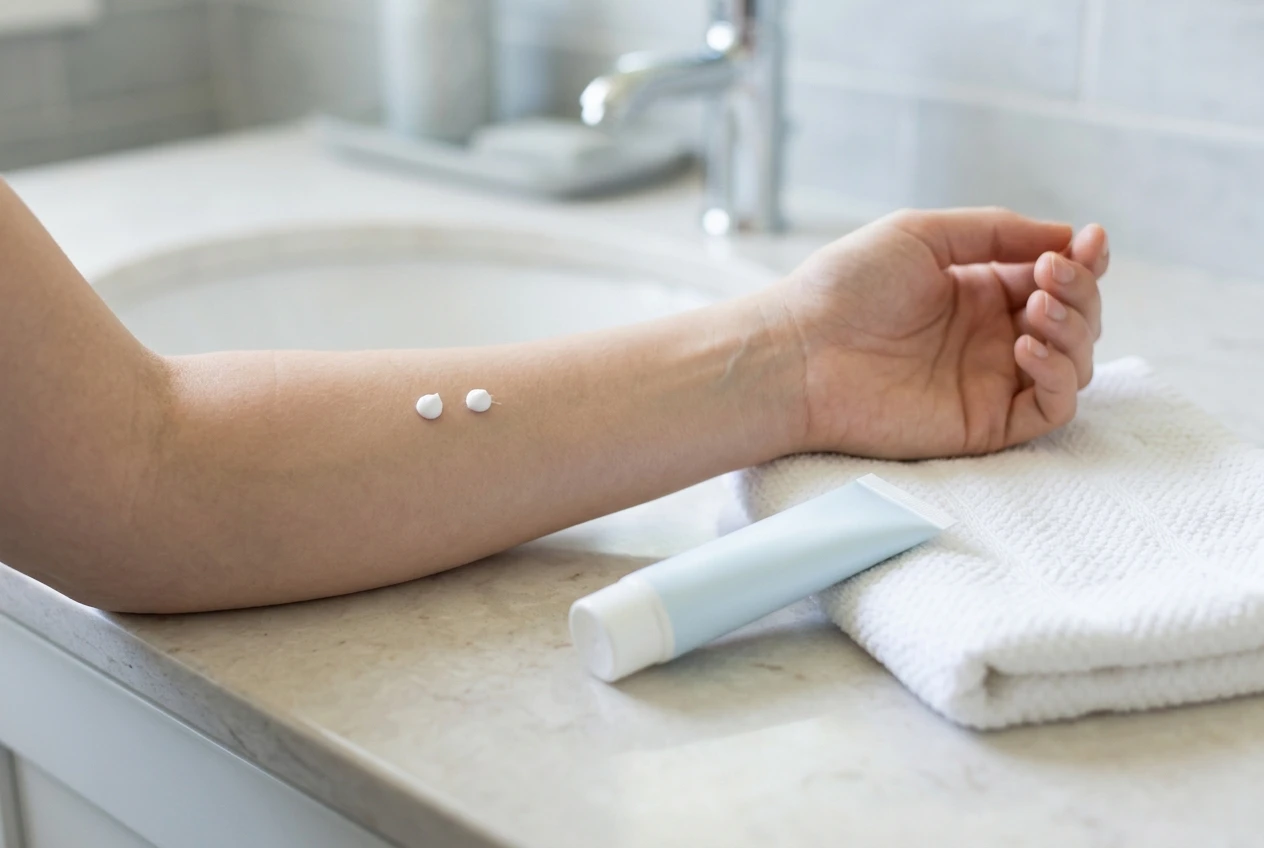
- Apply a small amount to the inner forearm or behind the ear once a day for two or three days.
- If that area stays calm, apply a tiny amount to the outer edge of the eye area, along the bone, for a few more days.
- Only then bring it closer to the eye, and add it no more than once a day at first.
Stop if you notice stinging, swelling, redness or itchiness, and rinse gently with water. If the reaction is strong, doesn’t clear up, or you have persistent swelling around your eyes, check with a doctor or eye specialist, because several non-skincare issues can cause it, including allergies and thyroid or eyelid conditions.
Ingredients worth looking for on an eye cream label, and what to skip
You don’t need a long list of buzzwords. A handful of ingredients cover most needs.

Worth looking for
- Glycerin and hyaluronic acid: draw water into the skin’s surface and soften the look of fine dehydration lines.
- Ceramides: support the skin’s protective barrier, helpful for dry, thin or reactive skin.
- Peptides: often included for firmer-looking skin. Results tend to be subtle, but they are generally well tolerated.
- Niacinamide: can help with uneven tone and a weakened barrier. Lower concentrations are often more comfortable around the eyes.
- Vitamin C (in gentle forms): may brighten the look of brownish discoloration, though some versions sting, so patch test.
- Caffeine: can temporarily make puffiness look less obvious, though the effect doesn’t last.
- Mineral sunscreen (zinc oxide or titanium dioxide): a sunscreen made for the face, applied around the bone, protects against the main cause of lines and darker shadows. Some people find mineral filters gentler near the eyes.
Worth skipping, especially if you’re sensitive
- Added fragrance and essential oils
- Menthol, camphor and “cooling” or “tingling” ingredients
- Exfoliating acids and scrubs
- Strong retinol or retinoid products used right at the lash line. If you want the benefits without the sting, the post on gentle retinol alternatives for sensitive skin may help.
- Very heavy, oily formulas if you’re prone to milia or morning puffiness
A simple way to decide, plus how to add an eye cream without overcomplicating your routine
Ask yourself these questions in order:
- Does your current face cream sting, puff or feel greasy around your eyes? If yes, swap to a lighter, fragrance-free product there. A new eye cream is one way to do that.
- Do you have a specific concern, such as brownish dark circles, crepey texture or crow’s feet you want to target? If yes, an eye cream with a focused ingredient may be worth it.
- Is your skin simply a bit dry, with no real irritation? If yes, your face cream is probably enough, and your money is better spent on a daily sunscreen.
- Are your dark circles mostly blue-toned or run in your family? If yes, hold your expectations low and skip expensive products.
If you do add an eye cream, keep it simple. Introduce one product at a time, use a pea-sized amount for both eyes, and pat it on with your ring finger rather than rubbing. Give it six to eight weeks before judging it, because subtle changes in the eye area take time. If you notice no difference after that, it’s fine to stop and go back to your face cream. For the step-by-step order of products, the morning and night skincare routine for crow’s feet lays it out.
Get a gentle checklist for choosing eye cream
If you’d like help reading labels without second-guessing every ingredient, join the email list for a free, gentle checklist of what to look for on an eye cream label. It’s short and easy to keep on your phone while you shop. Some of the product picks on this site are available through affiliate links, which means I may earn a small commission if you choose to buy, at no extra cost to you.