Plenty of women over 40 want retinol. It is one of the most studied ingredients for fine lines and rough texture, and the results are real. Then a week of redness, tightness and flaking sends the bottle to the back of the bathroom cabinet, and the idea of trying again feels like a mistake.
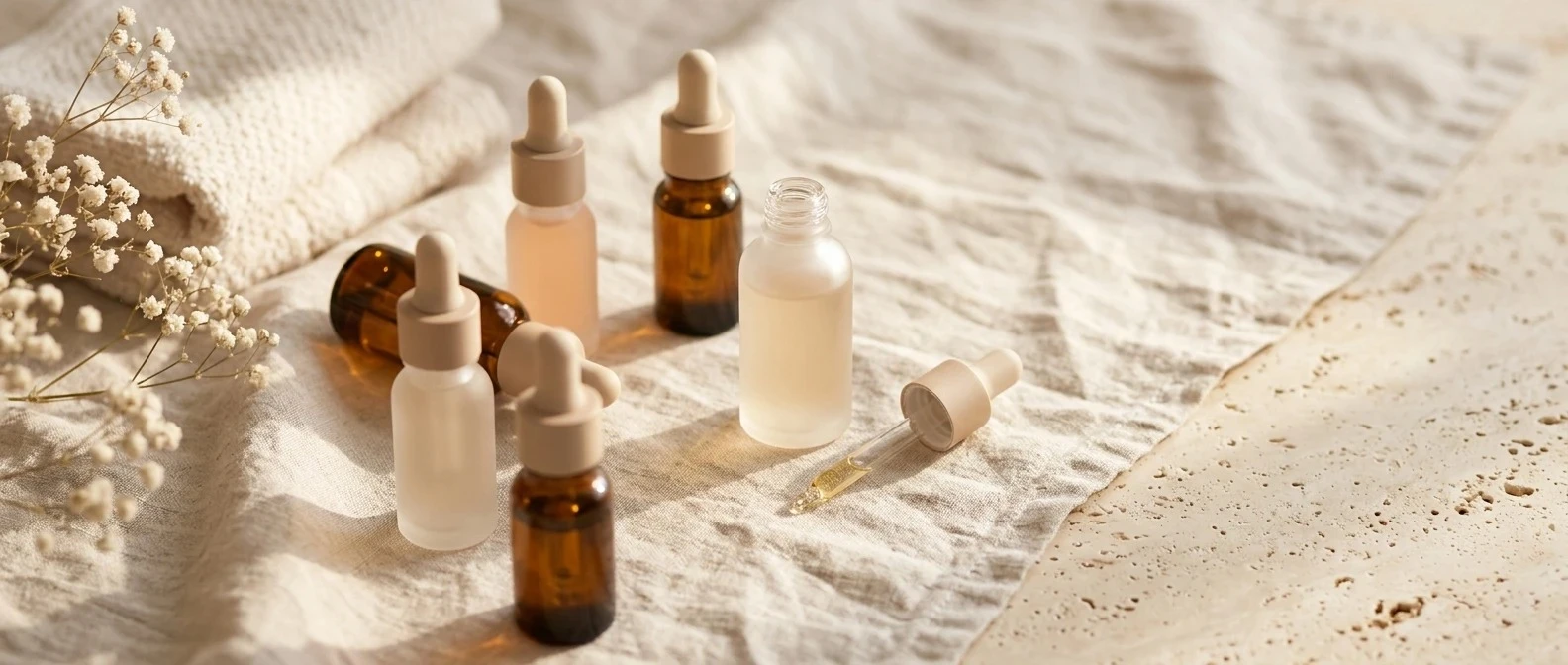
That reaction usually has less to do with retinol itself than with strength, frequency and formula. Choosing a gentler product and building up slowly changes the experience a great deal. This guide covers how to choose the best retinol serum for mature sensitive skin, five situations that call for different kinds of serum, and a slow schedule for starting.
Why retinol stings mature skin, and why it doesn’t have to
Your skin converts retinol into retinoic acid, which tells skin cells to turn over faster and supports collagen production. That is where the smoothing comes from. It is also where the irritation comes from, because faster turnover temporarily disturbs the skin barrier.
Mature skin has less margin for that disturbance. Oil production drops with age, the outer layer holds less water, and the skin itself is thinner, especially around the eyes. A dose that a 25-year-old shrugs off can leave you flaky and red.
Most bad first experiences trace back to a few avoidable things:
- A strength that was too high for a first try
- Using it every night from day one
- Applying it to damp skin, which can increase how much gets in
- Stacking it with exfoliating acids or scrubs on the same night
- Skipping moisturizer, or using one that does not support a dry barrier
Every item on that list can be fixed, and fixing them is most of what “gentle” means.
What makes a retinol serum gentle: strength, formula and packaging
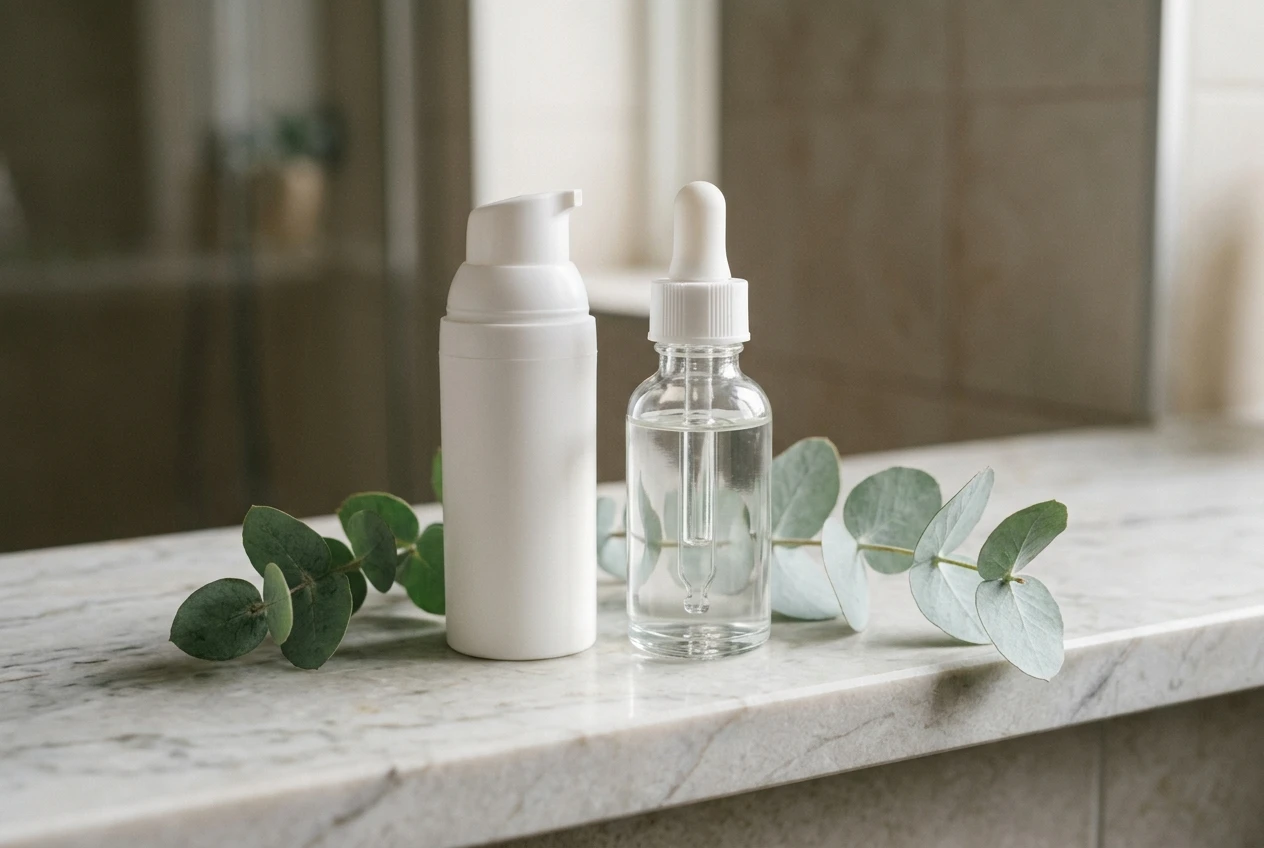
Three things are worth checking on any product page before you buy.
Strength
Retinol serums are sold in a range of percentages, and lower numbers are easier on sensitive skin. Many gentle, beginner-oriented serums sit at the low end of that range, and higher percentages are better saved for later, if you ever want them. Compare the number on the brand’s own page rather than relying on words like “gentle” or “advanced” on the front of the box. If a brand does not state the percentage anywhere, you cannot judge the strength, and that is a reason to pick a different product.
Formula
The base the retinol sits in matters as much as the retinol. Look for supportive ingredients such as ceramides, squalane, glycerin, hyaluronic acid, panthenol or niacinamide. Some serums use encapsulated or slow-release retinol, which is designed to deliver the ingredient gradually. That can feel milder, though your own skin is the real test.
For sensitive skin, check the full ingredient list for added fragrance, essential oils and high-up alcohol such as denatured alcohol. These are common triggers and add nothing to the retinol’s job.
Packaging
Retinol breaks down with light and air. An opaque airless pump or a narrow-necked tube protects it better than a clear glass dropper or an open jar. A serum that has degraded gives you less benefit, and you may be tempted to use more of it.
Five gentle retinol serums, matched to your kind of sensitive
Strengths, formulas and prices change as brands reformulate, so this section describes the type of serum that suits each situation instead of freezing a product list that may be out of date. For each one, the last line tells you what to confirm on the brand’s own product page. Whichever you choose, patch test first: apply a small amount to the jawline or behind the ear for a few nights and watch for reactions before using it on your whole face.
1. For dry, thin skin: a cushioned, cream-textured serum
If your skin feels tight by mid-afternoon and fine lines look deeper when you are dehydrated, a watery, alcohol-based serum will make things worse. Choose a lotion-like or lightly creamy serum with a low retinol percentage and a barrier-supporting base of ceramides, squalane or glycerin.
You can use it as the middle layer of a “sandwich”: moisturizer first, serum, then moisturizer again. That slows absorption slightly and cushions the skin.
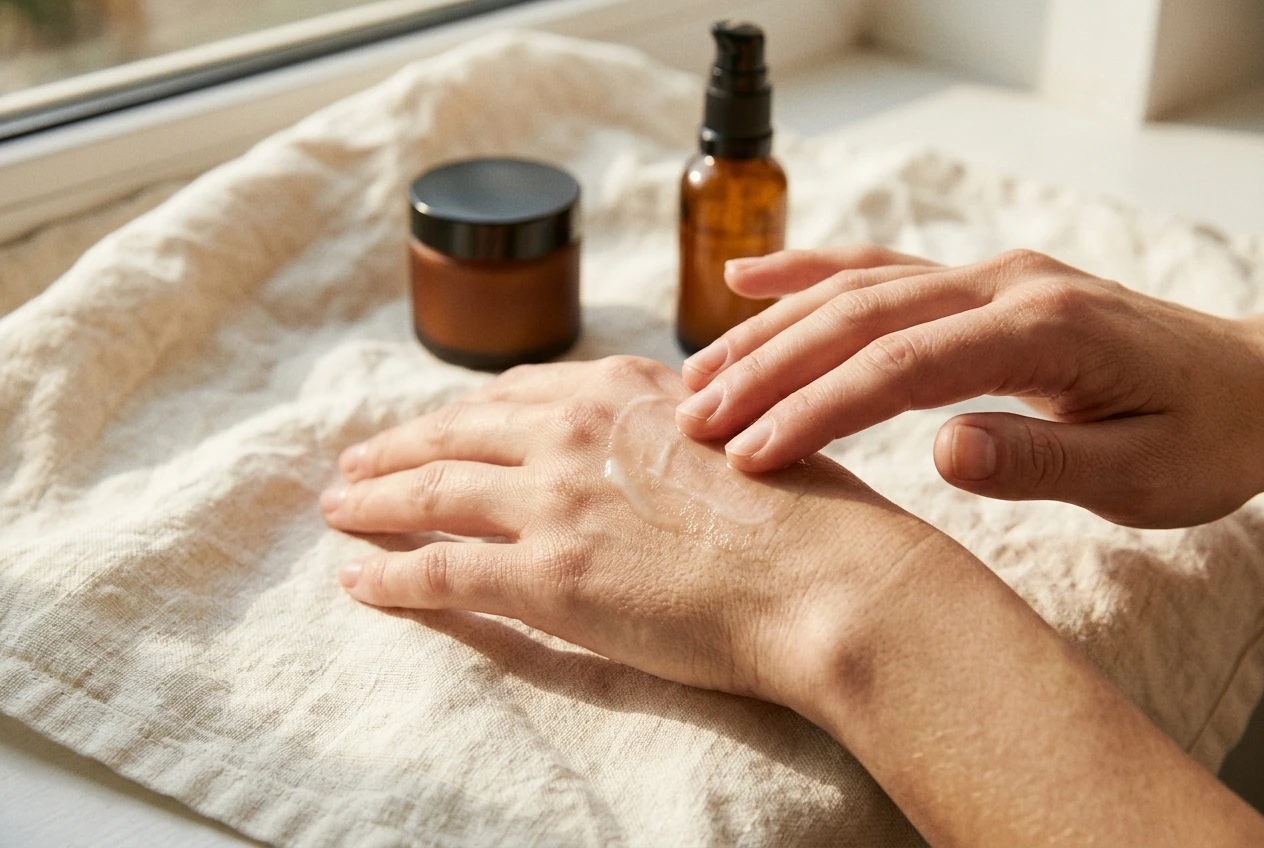
Confirm on the brand’s page: the retinol percentage, ceramides or squalane in the ingredient list, and no added fragrance.
2. For redness-prone skin: a low-strength serum with calming ingredients
If your cheeks flush easily or you have a tendency toward visible redness, look for a fragrance-free serum at the lowest strength the brand offers, with soothing ingredients such as panthenol, allantoin or centella asiatica. These do not cancel out irritation, but they give the skin more support while it adjusts.
If you have been diagnosed with rosacea, or you suspect it, speak with a dermatologist before using any retinoid. It can aggravate active rosacea in some people.
Confirm on the brand’s page: the full ingredient list, no fragrance or essential oils, and whether the brand states it is formulated for sensitive skin.
3. For crow’s feet: a serum or cream made for the eye area
The skin at the outer corners of your eyes is among the thinnest on your face, and it is where many women want results most. A product that explicitly says it is suitable for the eye area is a safer choice than guessing with a face serum. A small pump or narrow applicator helps you control the amount.
Eye-area retinol products are usually made at lower strengths for this reason. If you already use a gentle face retinol, a small amount applied at the outer edges may be all you need, as described in the eye section below.
Confirm on the brand’s page: that the instructions allow use near the eyes, the strength, and the applicator type.
4. For the first-timer: the simplest formula at the lowest strength
If you have never used retinol, you do not need a multi-active “anti-aging cocktail.” Products that combine retinol with exfoliating acids, peptides and several botanical extracts make it hard to tell what is irritating you. Choose a short, plain ingredient list, a low percentage and clear directions for beginners.
A simple serum also makes the slow schedule below easier to follow, because you know exactly what is going on your skin.
Confirm on the brand’s page: the percentage, beginner usage instructions, and a short ingredient list without added acids.
5. For returning after a break: one step down from where you stopped
If you used retinol years ago and quit because of irritation, or paused for a few months, your skin has lost its adjustment. Treat yourself as a beginner again. Pick a strength at or below what you used before, and start with two nights a week even if you were once using it nightly.
If the product that irritated you before was strong, a lower-percentage serum with a more supportive base is a reasonable second try.
Confirm on the brand’s page: the percentage compared with your previous product, and whether the brand lists a lower strength option in the same line.
How to start: a slow two-nights-a-week schedule and when to step up
Slow starts work better than fast ones because the goal is to keep your barrier intact while your skin adapts. Here is a simple schedule:

- Weeks 1 and 2: Use the serum two nights a week, with at least two nights between them, for example Monday and Thursday. Use moisturizer only on the other nights.
- Weeks 3 and 4: If your skin feels comfortable, stay at two nights. If you notice dryness, hold here longer.
- Weeks 5 and 6: Add a third night, still spaced apart, if your skin has stayed calm.
- After that: Move to every other night only if you want to, and only if your skin stays comfortable. Many people do well at two or three nights a week for the long term.
Step up only after two comfortable weeks in a row. There is no prize for getting to nightly use faster.
How to apply it
- Cleanse with a gentle, non-foaming cleanser and let your skin dry completely before applying.
- Use about a pea-sized amount for the whole face and neck.
- Follow with a moisturizer, or apply a thin layer first if you are using the sandwich method.
- Keep exfoliating acids, scrubs and other strong actives for different nights.
If your skin objects
Mild tightness or slight dryness in the first weeks is common. Burning, stinging, persistent redness or visible peeling means you should stop for a few nights and use only a plain moisturizer until your skin settles. Then restart at one night a week, or at a lower strength.
Retinol works over months, not days. Visible smoothing of fine lines usually takes a good while of consistent use, so do not judge a serum after two weeks.
Using retinol around the eyes for crow’s feet without the redness
Eye-area skin is thinner and has fewer oil glands, so it reacts sooner. A few habits make a difference:
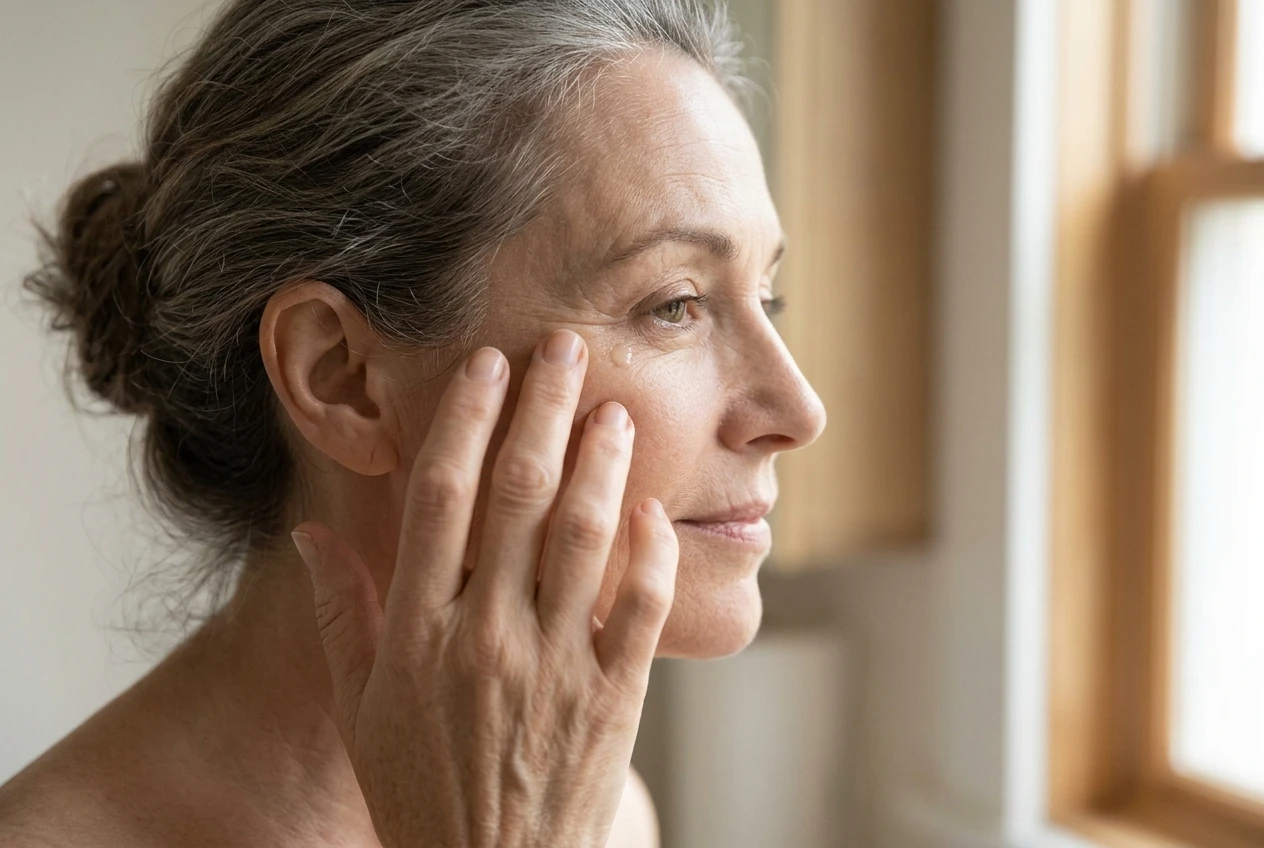
- Use very little. If you are applying a face serum, the amount already on your face tends to spread toward the eyes. You often do not need to add more there.
- Place it carefully. Dab a tiny amount along the bony ridge at the outer corner of the eye, where crow’s feet form, and keep it off the eyelids and lash line.
- Leave a gap. Stay about a finger’s width from the eye itself.
- Moisturize afterward. A bland eye cream or a face moisturizer on top reduces dryness.
- Start less often. Begin the eye area one night a week while your face is adjusting, then match it to your face schedule.
If you want a full routine built around this concern, the morning and night routine for crow’s feet shows where retinol fits alongside everything else.
When to skip retinol and try an alternative instead
Retinol is not right for every skin or every moment. Hold off if you have:
- An active flare of rosacea, eczema or dermatitis
- Broken, sunburned or very raw skin
- Recently had a skin procedure, unless your provider says otherwise
- Persistent burning even at a low strength and slow schedule
If you are pregnant or trying to conceive, retinoids are generally avoided, so talk with your doctor before using any.
If you have tried a careful start and your skin still will not tolerate it, that is useful information, not a failure. There are gentler options that still support smoother-looking skin, and they are covered in this guide to retinol alternatives for sensitive skin.
Protecting your results: sunscreen and layering basics
Sunscreen belongs in your routine every morning while you use retinol. Sun exposure undoes much of the smoothing you are working toward, and skin adjusting to retinol is more reactive. Mineral sunscreens with zinc oxide or titanium dioxide are often tolerated well by sensitive skin. If you worry that sunscreen causes breakouts, this guide to sunscreen myths and facts explains what to look for.
Keep layering simple. Retinol goes on at night, and your other active ingredients can go on the nights you skip it or in the morning. For the order of products and which combinations tend to cause trouble, see how to layer serums on mature skin.
A calm barrier is what allows retinol to work, so measure progress by how comfortable your skin feels as well as how it looks.
Keep going gently
Retinol can work for sensitive, mature skin when strength, formula and pace are all chosen for it. Start with a low-percentage serum that suits your situation, give your skin weeks to adapt, and protect it with sunscreen and moisturizer every day.
If you want more gentle, no-pressure skincare notes, join the email list. It includes what to do when a new serum doesn’t agree with your skin.